






The Sahara's Fennec Fox
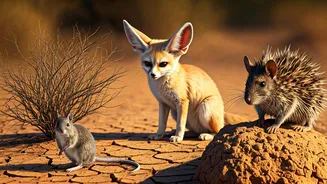
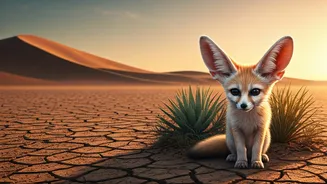
Venturing into the scorching expanse of the Sahara Desert, the Fennec Fox showcases an extraordinary ability to thrive without actively seeking out water
sources. Its primary method of hydration involves a diet rich in moisture-laden plants, supplemented by insects and small prey it hunts. This clever adaptation allows it to obtain all the fluids it requires directly from its meals, demonstrating a remarkable evolutionary strategy for survival in one of the driest places on Earth. Its small size and nocturnal habits also contribute to minimizing water loss, making it a true marvel of desert adaptation.
The Desert Jerboa's Secret
Inhabiting the parched landscapes of arid regions, the Jerboa exemplifies an exceptional capability to subsist without direct water consumption. These small, hopping rodents are masters of extracting vital moisture from the food they eat, which typically consists of dry seeds and plant matter. Furthermore, their internal metabolic processes generate a surprising amount of water as a byproduct. This dual approach means they rarely, if ever, need to approach a waterhole, highlighting an incredible biological efficiency for surviving in water-scarce environments. Their ability to conserve water is truly astounding.
Kangaroo Rat's Water Wisdom
The Kangaroo Rat, a diminutive rodent native to desert terrains, possesses an astonishing adaptation that allows it to live its entire life without ever taking a drink of water. Its sustenance comes solely from dry seeds, from which it efficiently extracts all the necessary moisture. To further conserve this precious internal water supply, the Kangaroo Rat produces incredibly concentrated urine, minimizing fluid loss. This physiological marvel ensures its survival in habitats where free-standing water is virtually nonexistent, showcasing a pinnacle of evolutionary water management.
Koala's Leafy Hydration
In the eucalyptus forests of Australia, the Koala is famously known for its arboreal lifestyle and its peculiar hydration habits. These marsupials seldom drink water directly from natural sources, relying instead on the high moisture content found within the eucalyptus leaves they consume. These leaves, a primary food source, provide nearly all the hydration the Koala needs to survive. This specialized diet and the associated physiological adaptations make it a unique example of an animal that derives its water requirements indirectly, fitting perfectly into its niche environment.
Naked Mole-Rat's Underground Life
Dwelling in the subterranean world beneath the earth's surface, the Naked Mole-Rat has evolved a remarkable method for obtaining its hydration. These unusual rodents acquire all the water they need from the roots and tubers they consume as part of their diet. Their underground existence shields them from the harsh surface conditions and the need to venture out for water. By efficiently utilizing the moisture present in their food, they effectively eliminate any requirement to interact with surface water bodies, a testament to their specialized evolutionary path.
Thorny Devil's Skin Absorption
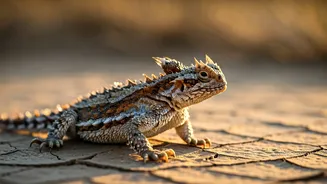
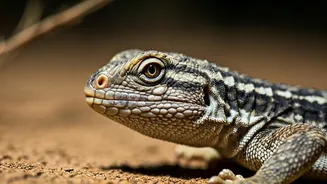
The Thorny Devil, an iconic Australian lizard, displays a truly unique approach to hydration, eschewing traditional drinking altogether. Instead of seeking out waterholes, this reptile has developed a fascinating method of absorbing moisture directly through its specialized skin. It collects dew that settles on its body during cool desert nights or moisture from damp sand. This absorbed water is then channeled to its mouth via a network of tiny grooves on its skin. This ingenious adaptation allows it to thrive in extremely arid environments without ever needing to drink.