







Progressive Overload Principle
The cornerstone of Davis Diley's chest training philosophy is the principle of progressive overload, meaning consistently challenging your muscles to lift
heavier weights, do more reps, or reduce rest times over time. This approach stimulates muscle fibers and promotes hypertrophy, or muscle growth. Diley stresses the importance of gradually increasing the training stimulus to avoid plateaus and continuously make progress. This principle is not just about adding weight; it also includes manipulating sets, reps, and rest periods to increase intensity. Diley would emphasize the need to listen to your body and adjust the training load to prevent injury while continuing to challenge yourself. Diley's approach prioritizes incremental increases, ensuring a sustainable path to muscle growth.
Exercise Selection Matters
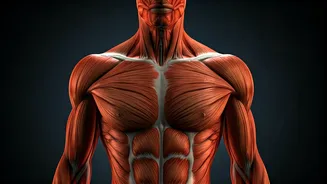
Choosing the right exercises is crucial for chest development. Diley would emphasize exercises that effectively target all areas of the chest: the upper, middle, and lower pectorals. He would likely advocate for a mix of compound and isolation exercises. Compound exercises like the bench press, incline bench press, and dips are essential, as they engage multiple muscle groups and allow for heavier lifting. Isolation exercises, like dumbbell flyes and cable crossovers, help to specifically target the chest muscles for enhanced shaping and definition. Diley would also consider the individual's muscle structure and goals when recommending exercises, modifying his approach to suit the lifter's needs and ensure optimal results. He may also vary exercises over time to avoid adaptation and stimulate continuous progress.
Perfecting Form Techniques
Proper form is paramount in Diley's chest workouts. He would insist on maintaining control throughout the entire range of motion to maximize muscle activation and minimize the risk of injury. He would recommend focusing on a controlled descent and ascent during exercises such as bench press, emphasizing the contraction of the chest muscles. Diley would suggest using a spotter when lifting heavy weights to ensure safety and provide assistance when needed. He may also recommend filming your workouts to assess and correct any form imperfections. Paying close attention to form allows for greater mind-muscle connection, improving the effectiveness of each exercise and enhancing muscle growth while minimizing the chances of injury. Diley believes that mastering the technique is the key to unlocking maximum chest development.
Structuring Your Workouts
Davis Diley's workout structure likely involves a strategic arrangement of exercises, sets, reps, and rest periods to optimize muscle growth. He would probably begin with compound exercises, such as the bench press, to leverage the most significant muscle recruitment and the capacity to lift the heaviest weight. These exercises would be followed by isolation movements, working towards complete chest development. A typical workout might include 3–4 exercises, with 3–4 sets per exercise and 8–12 repetitions. Rest periods may vary from 60 to 90 seconds between sets to allow for adequate recovery without sacrificing intensity. Varying the training variables – like rep ranges, set numbers, and rest periods – over time is also very crucial, to prevent plateaus and shock the muscles into continued growth. Consistency in workout scheduling is also important.
Incorporating Training Variety
To prevent plateaus and continually stimulate muscle growth, Davis Diley would incorporate training variety. This means periodically changing the exercises, rep ranges, set schemes, and even the tempo of the movements. Varying the exercises helps target the chest muscles from different angles, promoting comprehensive development. Changing the rep ranges, for example, from lower reps with heavier weights to higher reps with lighter weights, can stress the muscles in different ways, fostering both strength and hypertrophy. Incorporating techniques like drop sets, where you reduce the weight after reaching failure, can further enhance muscle fatigue and growth. Periodizing the workouts, where the training intensity and volume are systematically varied over time, could be another technique Diley might use. Adapting the training program periodically would ensure that the muscles continue to be challenged and grow.
Rest and Recovery Strategies
Davis Diley would emphasize the importance of rest and recovery as integral to muscle growth. Adequate rest between workouts, typically 48–72 hours for the chest, is vital for muscle repair and growth. He would probably highlight the importance of sufficient sleep, typically 7–9 hours per night, as this is when the body releases growth hormones. Diley would also emphasize the role of nutrition in recovery. This would include consuming sufficient protein to repair muscle tissue, as well as carbohydrates and healthy fats to fuel the body. The appropriate hydration is also essential. Strategies to manage stress would also be essential, since high stress levels can hinder recovery and muscle growth. Listen to your body and adjust the training intensity and volume as needed, to allow for adequate recovery.