







Landsat's Enduring Legacy
Since its debut in 1972, the collaborative NASA/USGS Landsat initiative has been humanity's steadfast chronicler of Earth's landmasses, holding the most
extensive, unbroken record of our planet's surface as viewed from space. Unlike many other observational satellites that have a limited operational lifespan, Landsat has provided a continuous, high-resolution perspective, effectively acting as a 'time machine' that permits scientists to meticulously trace the transformations in our forests, agricultural lands, and coastal regions over more than fifty years. This long-term data is far more than just visually appealing imagery; it serves as a critical catalyst for understanding global environmental shifts and fostering economic stability. The consistent, objective data generated by Landsat forms the foundational basis for thousands of scholarly research papers. By meticulously documenting phenomena ranging from the gradual shrinkage of glaciers to the rapid expansion of urban areas, it furnishes the concrete evidence essential for policymakers to formulate well-informed environmental regulations and effective land-use management strategies, underscoring its profound scientific and societal value.
Free Data, Huge Returns
In an age where access to critical information is often restricted by costly subscriptions, NASA's unwavering dedication to providing Landsat data without charge or limitation has generated extraordinary economic benefits. For instance, in the year 2023 alone, the program contributed an estimated $25.6 billion to the United States economy. This significant economic impact stems from its ability to empower a diverse array of industries, including advanced agricultural technologies, sophisticated water resource management systems, and crucial disaster prediction and response efforts. The availability of this vast, high-quality dataset democratizes access to crucial environmental information, enabling innovation and informed decision-making across various sectors. This commitment to open data not only fuels scientific discovery but also translates directly into tangible economic growth and enhanced societal resilience, highlighting the immense value of publicly accessible environmental monitoring.
Spell Your Name from Space
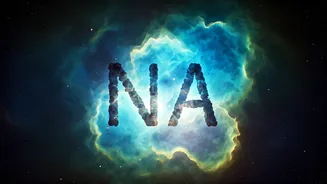
In a spectacular nod to Earth Day, NASA's Kennedy Space Center has unveiled an innovative interactive experience that ingeniously transforms the entire planet into a personalized canvas. This groundbreaking digital tool harnesses the immense visual repository compiled by the Landsat satellite program, enabling users to literally write their names using the raw, unadulterated beauty of Earth's varied geographical features. Instead of employing conventional fonts, the system identifies naturally occurring formations that visually mimic letters of the alphabet as observed from orbit. Consequently, your initials could be artistically rendered by a serpentine river snaking through the Amazon rainforest, a rugged, serrated mountain range in the Rockies, or even the distinct circular edge of an isolated coral reef system. This fusion of art, science, and personal expression offers a unique and engaging way to connect with our planet.
Deep Dive into Literacy
Beyond its immediate visual appeal and novelty, this remarkable project serves as a profound gateway into enhancing planetary literacy, offering multiple layers of engagement and understanding. Each letter that is constructed within your name is accompanied by a precise geographical identifier, offering definitive information about the exact location on Earth where that particular landform can be found, thus grounding the abstract in tangible reality. Furthermore, the imagery utilized is drawn directly from the esteemed Landsat archive, a gold standard in Earth observation, thereby providing a window into over five decades of environmental evolution and change. This initiative artfully transforms complex satellite telemetry and scientific data into an accessible, playful, and easily shareable format. By doing so, it makes the intricate science of Earth observation comprehensible and engaging for a broad audience, democratizing knowledge and fostering a deeper appreciation for our dynamic planet.