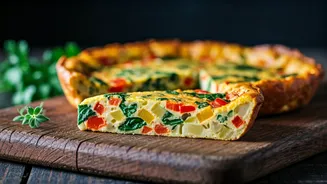







What is a Frittata?
A frittata is a versatile egg-based dish that’s essentially an Italian version of an omelet. Unlike an omelet, which is typically folded, a frittata is cooked
open-faced, often starting on the stovetop and finishing in the oven. This method allows for even cooking and the incorporation of various ingredients throughout the eggs. It's a fantastic way to utilize leftover vegetables, meats, and cheeses, making it a convenient and adaptable meal option. Frittatas are known for their simplicity and the ease with which you can customize them to your liking. They are perfect for breakfast, brunch, lunch, or even a light dinner.
The Basic Recipe
Creating a frittata starts with a foundation of fresh eggs and a few basic ingredients. Typically, you'll need eggs (of course!), some milk or cream for a richer texture, and salt and pepper for seasoning. The process usually begins by whisking the eggs, milk/cream, and seasonings together until well combined. Next, you'll typically saute any desired vegetables or meats in an oven-safe skillet. Once those are lightly cooked, pour the egg mixture over the top, and cook on the stovetop for a few minutes to set the edges, then transfer it to a preheated oven to finish cooking until the eggs are set. Cheese can be added at the end, either sprinkled on top during the final few minutes of baking. The exact time and temperature will vary depending on your oven and the ingredients used.
Flavorful Add-Ins
The beauty of a frittata lies in its adaptability. You can incorporate nearly any ingredient you like. Consider combinations such as spinach and feta, creating a light and flavorful dish. Another classic is a combination of mushrooms, onions, and Swiss cheese, offering a savory and earthy taste. For those who enjoy a bit of spice, try a frittata with chorizo, peppers, and cheddar cheese. Leftover roasted vegetables work wonderfully too. Essentially, the possibilities are endless. When adding ingredients, pre-cook any vegetables that take longer to cook, like onions or peppers, before adding the eggs. Cook meats until they are cooked through.
Avoiding Mistakes
Even the most experienced cooks can stumble when making a frittata. One common mistake is overcooking. Overcooked frittatas can become rubbery. Monitor the cooking time closely, and aim for a slightly wobbly center. Another common issue is using too much liquid. While a bit of milk or cream adds richness, too much can result in a soggy frittata. Also, be sure to use an oven-safe skillet or pan. If the pan isn't oven-safe, you'll need to transfer the frittata to a suitable baking dish after setting the edges on the stovetop. Ensure the eggs are thoroughly whisked, but do not overmix. This can lead to a tougher texture. Lastly, make sure to season adequately. Salt and pepper are essential for bringing out the flavors.