




Early American Interests
The United States' interest in Cuba began long before the 20th century, even though direct involvement was limited. Initially, the US saw Cuba's strategic
location in the Caribbean as a key advantage, especially in terms of trade and naval power. The island's proximity to the US mainland made it a potential location for expanding influence and economic opportunities, and as a strategic point for protecting American interests in the region. However, these early interactions were primarily focused on economic and strategic benefits rather than significant political engagement or long-term alliances. The US maintained a watchful presence, monitoring the island's affairs and positioning itself to react to any developments that might affect its interests.
Spanish-American War Impact
The Spanish-American War in 1898 marked a significant turning point in the relationship between the US and Cuba. Initially, the US intervened in the Cuban War of Independence, supporting Cuban rebels against Spanish colonial rule. This intervention led to the end of Spanish colonialism in Cuba and a temporary US military presence on the island. After the war, the US gained considerable influence over Cuba through the Platt Amendment, which granted the US the right to intervene in Cuban affairs. This amendment gave the US extensive control over Cuban politics, economy, and foreign policy, shaping the island's development. This intervention set the stage for a complex dynamic in US-Cuban relations, characterized by both dominance and resentment.
The Cuban Revolution Emerges
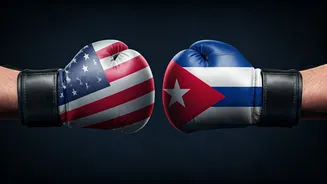
The Cuban Revolution of 1959, led by Fidel Castro, fundamentally reshaped the US-Cuba relationship. Castro's government took control of American-owned businesses and properties on the island, which directly antagonized the US. These actions, combined with Castro's communist stance and alignment with the Soviet Union, led to escalating tensions between the two countries. The US responded with a series of sanctions aimed at isolating Cuba economically and politically. The relationship swiftly deteriorated into open hostility as the US severed diplomatic ties and implemented a trade embargo. This new policy marked the start of a prolonged period of political, economic, and military conflict, characterized by mutual distrust and ideological opposition.
The Cold War Era
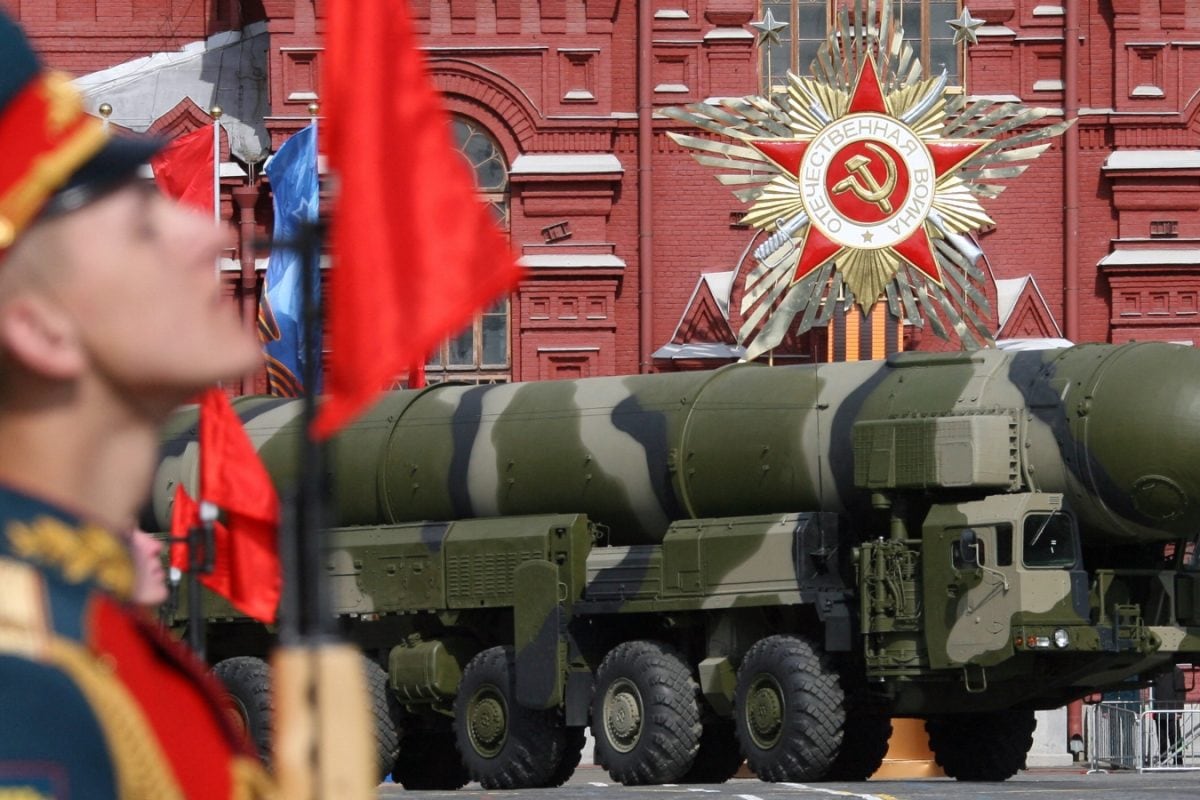
During the Cold War, the US-Cuba conflict was framed within the larger context of the global struggle between the US and the Soviet Union. Cuba's alignment with the Soviet Union made it a strategic concern for the US, particularly during the Cuban Missile Crisis in 1962. The crisis, which involved the Soviet Union's placement of nuclear missiles in Cuba, brought the world to the brink of nuclear war. This period of heightened tension and close calls demonstrated the severe risks and geopolitical implications of the US-Cuba conflict. Throughout the Cold War, the US maintained its policy of isolating Cuba, with sanctions, covert operations, and diplomatic pressure. The conflict became a battleground for ideological differences, each side seeking to undermine the other.
The Embargo Continues
The US trade embargo against Cuba, first implemented in 1960, remains a pivotal element of the ongoing conflict. The embargo prohibits virtually all trade between the US and Cuba, severely impacting the Cuban economy. Over the years, the embargo has been criticized internationally and has been a source of ongoing debate within the US. While it has been modified at times, such as to allow for certain exports of food and medicine, its overall impact has been to limit Cuba's economic growth and access to essential goods. The embargo's continuation reflects the persistent political divisions between the two countries, which is a major factor driving the conflict.
Obama's Thaw
The Obama administration marked a significant change in the US's approach to Cuba. In 2014, President Barack Obama and Cuban President Raúl Castro announced the normalization of diplomatic relations, signaling a major shift in the longstanding hostility. The US and Cuba reopened their embassies, relaxed travel restrictions, and took steps to ease economic sanctions. This thaw in relations led to increased engagement between the two nations, including high-level meetings and cooperation on issues such as healthcare and environmental protection. However, the normalization process faced challenges, particularly as political tensions remained. The changes highlighted the complexities of US-Cuba relations, the factors driving change and the challenges for both sides.
Trump's Reversal
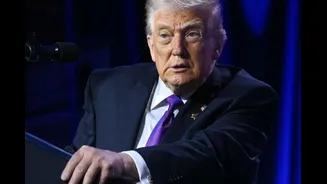
Under the Trump administration, the US policy toward Cuba reversed course. The Trump administration tightened restrictions on travel, trade, and economic activities. They imposed new sanctions and reversed many of the Obama-era policies. These actions reflected a shift towards a more confrontational approach. The administration argued that it aimed to pressure the Cuban government to undertake reforms, but the measures had the effect of increasing economic hardship on the island. This change demonstrates how political transitions can rapidly alter US-Cuba relations. The Trump administration's decisions undid the previous advancements, intensifying the ongoing conflict.
Current Tensions Persist
The US-Cuba conflict remains a complex and evolving issue. Despite the changes in policy, the fundamental issues driving the dispute persist. The US continues to have concerns about human rights, democracy, and the Cuban government's political alignment. Cuba continues to voice criticism about US interference in its internal affairs and the impact of the embargo. Ongoing political and economic differences ensure that the conflict will remain. The future of US-Cuba relations is uncertain, influenced by political shifts, the Cuban government's actions, and international dynamics. The unresolved issues and divergent views shape the persistent challenges in their relationship.