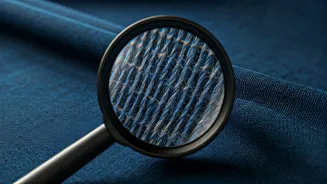







The Deceptive Label
Many consumers, especially during warm weather, gravitate towards clothing labeled '100% cotton,' believing it offers superior breathability and comfort.
However, this common understanding is often challenged by a nuanced approach to labeling. Dr. Tania Elliott, an internal medicine specialist and allergist practicing in New York City, has brought attention to a subtle but significant deception embedded within these labels. The phrase 'made with 100% cotton' does not necessarily mean the garment is entirely composed of cotton. Instead, this wording can refer to the cotton content itself being pure, while other materials might still be present in the overall fabric blend. This marketing tactic can lead consumers to purchase items under the false impression that they are acquiring a garment of unadulterated natural fiber, when in reality, synthetic materials could also be a significant component.
Why Fabric Matters
For individuals with sensitive skin, allergies, or particular dermatological conditions, the exact composition of clothing fabric extends far beyond a mere stylistic preference; it's a matter of physical well-being. Synthetic fibers, such as polyester, are known to have properties that can trap heat and moisture against the skin. This environment can become a breeding ground for bacteria, potentially triggering adverse reactions, exacerbating eczema flare-ups, or causing contact dermatitis. Consequently, for many, the ability of natural fibers to permit the skin to breathe and their generally lower potential for causing irritation makes them the preferred choice. Understanding the true fabric content is therefore essential for managing skin health and ensuring comfort throughout the day, especially when choosing attire for prolonged wear or specific environmental conditions.
Decoding Fabric Content
Navigating the truth behind fabric labels is a straightforward process once you know where to look. Dr. Elliott advises against relying on the prominent marketing statements often displayed on the front of a garment's tag. Instead, the key to accurate information lies in examining the 'fabric content' label, which is typically found on the reverse side of the tag. This section provides a precise breakdown of all materials used in the garment's construction, presented as percentages. For instance, you might find a label indicating '65% cotton, 35% polyester' or perhaps '100% organic cotton,' which, in this context, accurately reflects the material composition. By diligently checking this detailed information, consumers can move past superficial claims and make truly informed purchasing decisions based on the actual fabric makeup of their clothing.