





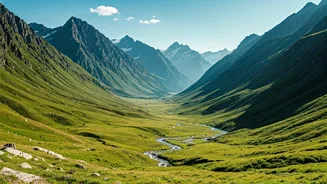

Bhutan's Sacred Giant
Gangkhar Puensum, standing at an imposing 7,570 meters, holds the title of the world's tallest mountain that has never felt the touch of a climber's boot.
Nestled within the pristine landscapes of Bhutan, this majestic peak is officially off-limits. The kingdom of Bhutan holds its mountains in deep reverence, considering them sacred sites, and as such, has imposed a complete ban on mountaineering activities. This spiritual respect ensures that Gangkhar Puensum remains a pristine, unblemished sentinel, preserved in its natural grandeur and untouched by the ambition of human conquest. Its unconquered status is a testament to the profound cultural values that prioritize spiritual sanctity over athletic achievement, making it a unique case among the world's highest peaks.
Himalayan Challenge Awaits
Labuche Kang III, a formidable Himalayan peak, represents the highest mountain not officially prohibited from climbing. Despite numerous expeditions venturing towards its summit, the mountain fiercely guards its secrets. Climbers have been repeatedly thwarted by a combination of treacherous natural obstacles, including perilous crevasses that lie hidden beneath the snow, sheer ice walls that demand extreme technical skill and courage, and the relentless fury of severe weather conditions. These formidable challenges have consistently forced even the most determined climbers to retreat, leaving Labuche Kang III as a testament to nature's raw power and an enduring symbol of the ultimate mountaineering test.
Spiritually Significant Summit
Mount Kailash, revered as one of the most spiritually profound mountains globally, holds immense significance for multiple major religions. Its sacred status dictates a strict prohibition against any attempts to climb it, a measure enforced out of deep respect for its religious importance. While the allure of its majestic presence undoubtedly captivates mountaineers and adventurers, the unwavering commitment to preserving its sanctity ensures that it remains an untouched monument of faith. This deep-seated respect for its spiritual heritage means that the challenge of climbing Mount Kailash is willingly forgone by those who understand and honor its profound cultural and religious value.
Antarctica's Isolated Enigma
Unlike many other unclimbed peaks renowned for their extreme altitude, Mount Siple in Antarctica presents a different kind of challenge: profound isolation. Its sheer remoteness is the primary reason why it has never been attempted by climbers. Reaching its base is an expedition in itself, requiring significant logistical planning and resources to navigate the harsh Antarctic environment. The vast, desolate expanse surrounding Mount Siple means that the sheer distance from any form of civilization and the logistical hurdles involved in staging an ascent have deterred any serious attempts, making it an enigma on a continent already defined by its extreme conditions and limited accessibility.
Karakoram's Hidden Peaks
The Summa Ri I and II peaks, situated within the rugged Karakoram range, remain untouched largely due to their extreme remoteness and the inherent dangers associated with the region. Avalanches are a constant threat, posing a significant risk to any who venture into their vicinity. Furthermore, the difficult access to these mountains presents substantial logistical hurdles. The combination of these factors—the sheer difficulty of reaching them, the ever-present danger of avalanches, and the overall challenging terrain—has meant that no climber has yet managed to successfully conquer their summits, leaving them as silent, imposing figures in one of the world's most formidable mountain ranges.
Reasons for Unconquered Summits
The persistence of unclimbed peaks is a complex tapestry woven from various factors, making them either nearly impossible or profoundly inappropriate to ascend. For mountains like Mount Kailash, deeply rooted religious beliefs dictate that they remain undisturbed out of reverence, leading climbers to voluntarily abstain. Others, such as Labuche Kang III, present extreme dangers with unstable ice formations, hidden fissures, and the constant threat of avalanches, making them technically arduous. Many are situated in incredibly remote locations, where the journey to the mountain's base alone can take weeks and involves immense logistical complications. In some instances, governmental restrictions further limit access, while in others, the sheer technical difficulty of the climb has simply exceeded the capabilities of any expedition to date, solidifying their status as the world's last great frontiers.