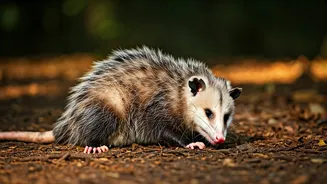

Opossums: Masters
Opossums are perhaps the most famous practitioners of thanatosis. When faced with a threat, an opossum may enter a catatonic state, appearing lifeless.
Its breathing slows, its heart rate decreases, and it even emits a foul odor, fooling predators into thinking it is already deceased. This strategy is highly effective against many predators. The opossum's body goes limp, its mouth may open, and it might even drool. This act can last from a few minutes to several hours, depending on the danger. This defense mechanism is not a conscious decision; rather, it’s an involuntary physiological response. By playing dead, the opossum reduces the likelihood of an attack or gives the predator a reason to lose interest and leave it alone, providing it a chance to escape unharmed when the threat passes.
Hognose Snakes: Drama Queens
Hognose snakes are renowned for their dramatic death performances. When threatened, these snakes put on quite a show. They start by flattening their necks and hissing loudly, like a cobra. If that doesn't work, they will writhe around, thrash about, and eventually, flip onto their backs, appearing dead. To enhance the illusion, they often release a foul-smelling musk. The more convincingly they play dead, the better their chances of survival. Their performance is very convincing, and often, predators will lose interest and move on. If turned over, the hognose snake will often flip back onto its back, emphasizing its 'deceased' state. This bluff is often enough to deter a predator looking for an easy meal.
Frogs: Playing Dead
Certain frog species employ thanatosis as a survival tactic. When confronted by a predator, some frogs will feign death to avoid being eaten. They may freeze in place, tuck their limbs, and remain motionless, hoping to be overlooked. Some frogs may even change their body posture to appear less appealing. Some of these frog species will also excrete a slimy substance, making them less palatable. This strategy depends on the predator’s willingness to prey on already deceased organisms. This tactic gives the frog a chance to escape when the danger passes, and can be particularly effective against predators who prefer live prey or are averse to the taste or condition of an animal that appears dead.
Beetles: Camouflage Experts
Many beetle species are masters of camouflage and playing dead. When facing a threat, beetles may freeze, tuck in their legs, and remain perfectly still, mimicking a piece of debris or a dead insect. Their exoskeletons often blend in with their surroundings, further enhancing the illusion. This strategy can be highly effective against predators that hunt by sight. This helps the beetles avoid detection by predators. By staying motionless, they become less noticeable and are often overlooked. The duration of this state can vary, depending on the level of perceived danger, allowing them to remain safe until the threat has passed and it is safe to move again.
Fish: A Clever Ruse
Some fish species also use thanatosis as a survival strategy, especially when facing larger predatory fish. They may stop moving, sink to the bottom, and appear lifeless. Some fish species have colors that blend in with the bottom, making it more difficult to spot. This motionless state might make predators lose interest, especially if the predator is only interested in live prey. In addition to this, some fish will release a cloud of foul-smelling chemicals that further deter predators. This strategy provides a valuable chance of survival, buying the fish time to escape or wait for the threat to pass before they become a potential meal.