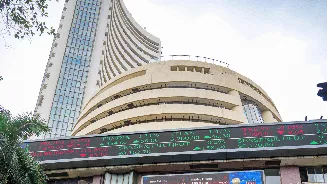

RBI's Economic Vision
The Reserve Bank of India (RBI) has played a pivotal role in shaping the economic narrative. According to the RBI, the Indian economy is exhibiting strong
performance, indicating a steady growth trajectory. Moreover, the RBI is focusing on customer-centric approaches and regulatory improvements for the upcoming year. The central bank has also commented on the risks associated with stablecoins, highlighting potential threats to monetary sovereignty. It is also projected that banks' Non-Performing Assets (NPAs) are expected to improve by March 2027, signaling enhanced financial stability within the banking sector. The RBI's actions and statements are significant indicators of the country's economic health and future direction.
Market & Sectoral Insights
Several sectors witnessed notable changes and developments. The stock markets experienced a surge during the last trading day of 2025. The Indian tea industry underwent a review of 2025 with an outlook projected for 2026. In the infrastructure sector, significant investments were announced. Delhi committed to investing Rs 17,000 crore in power infrastructure. Furthermore, approvals were granted for the Nashik-Solapur-Akkalkot corridor project, boosting regional connectivity. The real estate market saw a surge, with Mumbai property registrations reaching a 14-year high in 2025. These developments highlight the dynamism within the Indian economy, from capital markets to key infrastructure projects.
Policy & Regulatory Updates
Various policy changes and regulatory updates will influence the economic landscape. The Ministry of Labour pre-published draft rules for the new Labour Codes. Regarding trade, India is expected to hold talks with the Eurasian Economic Union (EAEU) in February. In the financial sector, Ashika Group plans to launch mutual funds after securing approval from the Securities and Exchange Board of India (SEBI). The government's actions include extending the Honey Export Minimum Export Price (MEP) until March 2026. The government's initiatives and regulatory adjustments are geared towards fostering economic growth, facilitating trade, and ensuring market stability.
Financial Market Dynamics
The financial markets have exhibited mixed performances and significant shifts. The rupee experienced a plunge in 2025, influenced by various factors. Crude oil futures declined due to weak spot demand. The gold and silver markets saw price fluctuations, with gains in 2025 and a mixed outlook for 2026. The gold and silver prices saw a plunge due to profit-booking and a strong dollar. The Bagmane Group REIT IPO is slated for a Rs 4,000 crore public issue. Furthermore, the fiscal deficit reached 62.3% of the target, and RBI's stance on unsecured loans fueling retail slippages indicates challenges within the financial sector. These dynamics reflect a complex interplay of internal and external factors influencing financial market trends.
Industry Developments
Several industries experienced specific developments and shifts. In the telecom sector, telcos lauded the allocation of the 6 GHz band for mobile services, whereas the broadband industry expressed disappointment. The automotive sector saw substantial investment, with the PLI Auto Scheme attracting Rs 35,657 crore in investments. The sugar industry witnessed an increase, with India's sugar output up by 23.43% from October to December. The DGCA has raised concerns regarding Dreamliner snags for Air India. Hettich expanded its retail presence in Tamil Nadu. The steel industry saw safeguard duty implementations to protect the Indian steel sector. These developments reveal evolving trends and the impact of policy and market factors on the industrial landscape.