



Variety Matters Most
When deciding between containers and in-ground planting for your tomatoes, the variety of tomato you choose is the single most crucial factor. Tomatoes
are broadly categorized into two types: determinate and indeterminate. Determinate varieties, often described as bushy, produce their fruit all at once over a short period and are generally more compact. This makes them excellent candidates for container gardening, as they are easier to manage in a confined space. Think of varieties like 'Celebrity' or 'Amish Paste' – they're well-suited for pots. On the other hand, indeterminate varieties, known for their vining growth habit, produce a continuous supply of tomatoes throughout the growing season until the first frost. These types, which include many popular heirloom and cherry tomatoes like 'Beefsteak' and 'Sungold,' require substantial support, such as robust staking or trellising, due to their continuous growth and larger size. Consequently, they often thrive best when planted directly in the ground where they have ample space to establish strong root systems and can be securely anchored.
Container Advantages Explored
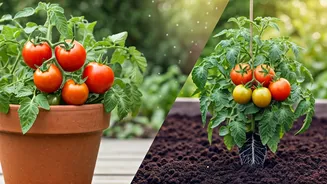
Container gardening for tomatoes offers a host of appealing benefits, particularly for those with limited space or specific gardening preferences. One of the primary advantages is enhanced soil management; you have complete control over the soil composition, ensuring excellent drainage and significantly reducing the risk of soil-borne diseases. Furthermore, the portability of pots is a major plus. Plants can be easily moved to follow the sun's path, ensuring optimal light exposure, or relocated to shield them from harsh weather conditions like unexpected frost or strong winds. This accessibility also means your tomato plants are conveniently located on a patio or deck, making harvesting a simple pleasure. An often-overlooked benefit is pest control; by raising plants in containers, you can create a barrier that deters many common garden pests. Finally, for urban dwellers or those with smaller yards, containers are remarkably space-efficient, allowing you to grow fresh produce without needing a large garden plot.
In-Ground Planting Benefits
While containers offer convenience, planting tomatoes directly into the ground presents its own set of distinct advantages, especially for gardeners seeking maximum yield and robust plant growth. One significant benefit is reduced watering frequency; plants established in the ground tend to retain moisture more effectively than those in containers, meaning less frequent watering is required. Anchoring support systems, such as stakes and arches, is also far more secure when planted in the earth, providing the stability needed for larger, vining indeterminate varieties. Setting up efficient drip irrigation systems for consistent watering is often simpler in a garden bed. Critically, in-ground planting provides unrestricted space for tomato roots to spread extensively, which is particularly beneficial for large heirloom varieties that require ample room to flourish. This vast underground real estate often translates into larger, more prolific yields, as the plants are not limited by the confines of a pot.
Raised Beds: A Hybrid Solution
For gardeners seeking a middle ground that combines some of the best features of both container and in-ground gardening, raised beds emerge as an excellent solution, particularly for the sprawling indeterminate tomato varieties. A raised bed provides a more stable structure for the robust staking and trellising that these vining plants demand. Unlike planting directly in the ground, raised beds offer superior control over soil quality, allowing for precise monitoring of moisture levels and drainage. This controlled environment is also highly effective in preventing soil-borne diseases. The structure of a raised bed, especially one around 17 inches deep, can accommodate sturdy anchoring systems, such as securely fixed arches, enabling the tomato vines to spread and maximize their fruit production. This method ensures better soil monitoring and fertilization, contributing to healthier plants and more abundant harvests.