
The Science of Ghee
For generations, ghee has been a go-to home remedy for skin issues, often dismissed as a mere kitchen ingredient. However, modern dermatology is now recognizing
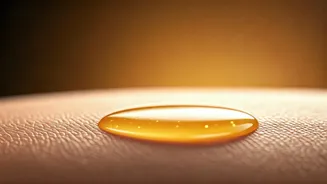
its efficacy, attributing its benefits to its intricate lipid composition. Pure, grass-fed ghee is more than just clarified butter; it's a rich source of beneficial compounds that interact favorably with the skin. A key component is Butyric Acid, a short-chain fatty acid known for its potent anti-inflammatory properties. When applied topically, it helps regulate the skin's immune responses, effectively calming redness and irritation associated with conditions like eczema and mild rosacea. Furthermore, ghee contains Conjugated Linoleic Acid (CLA) and fat-soluble vitamins such as Vitamin E and Vitamin A. Vitamin E acts as a powerful antioxidant, neutralizing free radicals caused by UV radiation which can lead to premature aging and collagen degradation. Vitamin A, on the other hand, plays a crucial role in the maturation and health of skin cells, contributing to a robust outer skin layer.
Reinforcing Your Skin Barrier
In environments with controlled air conditioning, the skin's natural barrier can become compromised, leading to dryness and dehydration. While synthetic ingredients like silicones and petroleum-based products often form a superficial layer, ghee offers a different approach. Its molecular structure closely resembles that of human sebum, the natural oil produced by our skin. This similarity allows ghee to penetrate deeply into the skin's lipid matrix, effectively replenishing lost lipids and repairing the stratum corneum, the outermost layer of the epidermis. This process significantly reduces transepidermal water loss (TEWL), ensuring profound hydration without a heavy or occlusive sensation. Ghee also cultivates a moist micro-environment conducive to accelerated tissue regeneration. This means minor cuts, scrapes, and blemishes can heal more rapidly when protected by its lipid-rich seal, contributing to smoother, more resilient skin over time.
The Magic of Washed Ghee
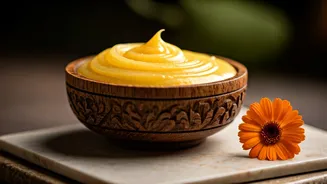
For those hesitant about the aroma of traditional ghee, a refined preparation known as Shata Dhauta Ghrita, or washed ghee, offers an elegant solution. This ancient Ayurvedic technique involves meticulously washing purified ghee with cold, pure water and vigorously agitating it in a copper vessel, often for up to 100 repetitions. Scientifically, this prolonged mechanical process initiates lipid hydrolysis, breaking down complex fats into simpler fatty acids and glycerol. The outcome is a remarkable transformation: the greasy texture is eliminated, yielding an odorless, exceptionally light mousse. This 'molecular ghee' exhibits enhanced penetration into the deeper dermal layers and a significantly reduced comedogenic rating, making it suitable for a broader spectrum of skin types. Its refined nature makes it a sophisticated ingredient for advanced skincare formulations, proving that tradition and modern understanding can converge for optimal results.
Realistic Expectations and Sourcing
Before incorporating ghee into your skincare routine, it's crucial to approach it with realistic expectations and adhere to important guidelines. Unprocessed, unwashed ghee can be quite dense; if you have acne-prone or naturally oily skin, it might exacerbate breakouts by trapping sebum and dead skin cells. Therefore, it's primarily best suited for individuals with severely dry or xerosis-prone skin. Visible results, such as the fading of hyperpigmentation, are not instantaneous and align with the skin's natural 28-day epidermal renewal cycle. Consistent application is key to observing these long-term benefits. Furthermore, the quality of ghee is paramount. Standard ghee derived from grain-fed cows contains lower concentrations of beneficial compounds. For the true clinical benefits of butyrate and omega-3s, it is essential to source pure, grass-fed A2 ghee. By understanding these nuances, you can harness the genuine power of this age-old remedy effectively.