




Sand Roasting: Ancient Delights
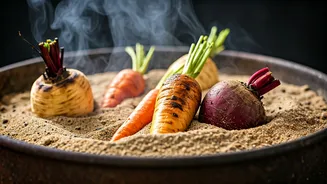
Sand roasting is an age-old method of cooking food, especially meats and vegetables, by burying them in hot sand. The sand acts as a heat conductor, distributing
the heat evenly and creating a moist environment, which allows the food to cook gently and uniformly. This technique is often used in desert regions and coastal areas where sand is readily available. The food is typically wrapped in layers of leaves or natural materials, which adds an additional layer of protection and flavor. It is a slow-cooking method that imparts a unique smoky flavor and keeps the food incredibly tender. The sand's properties allow the food to cook without direct contact with the fire, preventing burning and preserving the natural juices of the food. Think of it as a natural oven, creating a delicious and authentic experience. This technique provides a unique, earthy flavor to the final product, setting it apart from other cooking methods and highlighting the natural tastes of the ingredients. The process often involves selecting the right type of sand, heating it appropriately, and managing the cooking time. The final result is a tender, flavorful meal that reflects a deep understanding of natural cooking processes. Sand roasting brings you back to basic techniques and how the food was originally cooked and enjoyed.
Ice Cooking: Sub-Zero Cuisine
Ice cooking, in contrast, harnesses the cold. This method typically involves utilizing ice to cook or preserve foods. This can include freezing ingredients to alter their texture, using ice as a chilling medium to slow cooking processes, or even creating culinary components like ice creams and sorbets. This method is often employed in the creation of unique dishes where temperature is a critical aspect. It is a modern cooking technique that offers both challenges and opportunities for chefs to explore new flavors and textures. The use of ice in food preparation can also extend the shelf life of ingredients and add interesting components to dishes. Ice cooking might involve rapid freezing to create new textures, or even cooking with chilled equipment to control cooking processes. By manipulating the temperature, chefs can create dishes that showcase a wide range of tastes and culinary experiences. Moreover, different types of ice, such as flavored ice, can contribute distinctive elements to the culinary preparation. The cold temperature can also be used to quickly chill sauces, preventing food spoilage or degradation. Ice cooking is an innovative method and a gateway to creating unique textures and innovative culinary experiences, especially in hot climate areas.
Clay Pot Sealing: Flavor Locking
Clay pot sealing is a traditional cooking method that has been used for centuries, especially in many cultures. It involves placing food items, typically meats and vegetables, inside a clay pot. The pot is then sealed to trap the steam and flavors during the cooking process. The seal, which can be made from a mixture of flour and water, ensures that the food is cooked evenly and retains all its natural juices and aromas. This method creates a self-contained cooking environment, which helps to preserve the nutrients and enhances the taste. The food inside the clay pot is generally cooked on low heat, either in an oven or over a fire, allowing the contents to simmer slowly. This slow cooking allows the flavors to meld together, producing tender and savory meals. This technique gives food its distinctive flavor, giving it a unique character. The sealed environment ensures that the moisture and flavors of the ingredients are trapped, leading to a flavorful and delicious dish. The clay pot absorbs and distributes heat evenly, preventing scorching and promoting a moist cooking environment. This process is a testament to the power of ancient cooking methods that prioritize flavor and preservation.
Stone Cooking: Heat Retention
Stone cooking involves utilizing heated stones to cook food. It's a method that provides a unique blend of flavors and textures. This ancient technique often involves heating stones, typically flat river stones or smooth rocks, over an open fire or in a hot oven. The heated stones are then used to cook food directly, providing a quick and efficient cooking surface. The high heat of the stones sears the food, creating a crispy exterior while keeping the inside tender and juicy. This method can be used for a variety of foods, from meats and seafood to vegetables. It's an excellent method for grilling or searing because it provides a consistent and intense heat source. The stones retain heat efficiently and distribute it evenly, ensuring that food cooks quickly and efficiently. The direct contact with the hot stone enhances the flavors and provides a distinctive grilled taste. Stone cooking is a versatile method that produces delicious results, adding an element of authenticity and culinary exploration to any dish. It allows the food to cook fast while retaining its natural taste and flavour. This method can bring the taste of food to another level.
Cooking With Ash: Smoky Depth
Cooking with ash is a unique technique that adds a smoky flavor to food. It involves utilizing the remnants of a fire to enhance the taste of dishes. This technique can be traced back to the most rudimentary forms of cooking, where food was cooked directly on or near the ashes of a fire. The ash imparts a distinctive smoky flavor and creates a unique textural quality. This method requires careful management of the heat and the type of ash used. The ash acts as a natural seasoning, imparting a subtly smoky flavor to food. It is also a way to preserve food, by slowing down bacterial growth. Cooking with ash can be as simple as burying food in warm embers. This cooking method brings a rustic and authentic element to the cooking process, lending a touch of tradition to every meal. The choice of wood also influences the final flavor, adding an exciting dimension to the meal. Whether used for charring vegetables or slow-cooking meats, ash adds a unique smoky flavor and an authentic experience to food preparation.
Pressure Cooking: Speed & Flavor
Pressure cooking underwater is a cutting-edge technique that involves cooking food in a pressurized environment. This is often done using specialized equipment like pressure cookers or underwater pressure chambers. The main idea behind this method is to cook food at a higher temperature than boiling point, accelerating the cooking process and resulting in tender and flavorful meals. The pressure helps to keep the food moist and also reduces cooking time. This approach preserves the nutrients and flavors of the food. It's an efficient way to cook a wide variety of foods, from meats and vegetables to grains and beans. It is perfect for both home cooks and culinary professionals. The technique maintains the juices and natural flavors of the food. The pressure cooking technique ensures that food cooks evenly and with more speed. It is a fantastic option for dishes that normally need a lot of time to cook. The method offers versatility in the kitchen, allowing the preparation of various recipes with consistent results.