
What Is Vegetable Stock?
Vegetable stock, at its core, is a flavorful liquid foundation for countless dishes. It's essentially water infused with the essence of vegetables, aromatics,
and sometimes herbs, slowly simmered to extract their rich flavors. Unlike vegetable broth, which often contains added salt and seasonings, vegetable stock offers a blank canvas for chefs and home cooks to build upon. Its versatility makes it an indispensable element in soups, stews, sauces, and even as a cooking medium for grains. The quality of your stock directly impacts the final flavor of your dish, making homemade versions a superior choice over store-bought alternatives that often contain preservatives and artificial flavors. By controlling the ingredients, you can tailor the stock's taste to perfectly complement your culinary creations.
Choosing Your Veggies
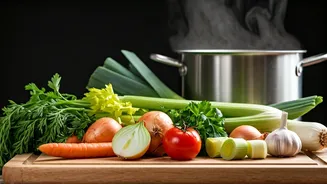
Selecting the right vegetables is the first step towards a superb vegetable stock. Opt for a variety of fresh, flavorful ingredients, steering clear of those that can impart bitter or overpowering tastes. A classic base often includes onions, carrots, and celery, known as the 'holy trinity' for their balanced flavor profiles. Leeks can provide a subtle sweetness, while garlic adds depth. Avoid using cruciferous vegetables like broccoli or Brussels sprouts in large quantities, as they can sometimes create a bitter taste. The use of starchy vegetables like potatoes should be kept to a minimum as they can cloud the stock. Vegetable scraps, such as onion skins, carrot tops, and celery leaves, are excellent for boosting flavor, but be sure to wash them thoroughly to remove any dirt or grit. Experimenting with different combinations of vegetables allows you to customize the stock's flavor to suit your needs.
Simmering for Perfection
The simmering process is where the magic happens. Place your chosen vegetables and aromatics in a large pot, then cover them with cold water. It's crucial to start with cold water; this helps extract the flavors gradually. Bring the water to a gentle simmer – avoid a rolling boil, as this can cloud the stock. Simmer the stock gently for at least an hour, or up to several hours for a deeper flavor. The longer you simmer, the more concentrated the flavors become. Remember to skim off any foam or impurities that rise to the surface during the simmering process; this will result in a clearer stock. Adding a bay leaf or a few peppercorns can further enhance the flavor. Be patient and allow the ingredients to meld together, resulting in a complex and delicious stock.
Seasoning Your Stock
Seasoning your vegetable stock is key to unlocking its full potential, but be cautious with salt at this stage. It's generally better to season the dishes you create with the stock rather than adding salt during the cooking process. Over-salting the stock can limit its versatility. Consider adding other seasonings during the simmering stage to boost the flavor. Fresh herbs like parsley, thyme, and rosemary can be added during the last 30 minutes of simmering. A pinch of black peppercorns can also add depth. Taste the stock near the end of the cooking process and adjust seasonings as needed, but always err on the side of under-seasoning. Remember that you can always add more salt later, but you can't take it away.
Storing the Stock
Proper storage is essential to preserving the flavor and extending the shelf life of your homemade vegetable stock. Once the stock has cooled, strain it through a fine-mesh sieve to remove all solids. This will give your stock clarity and prevent it from becoming cloudy. Allow the stock to cool completely before storing it. You can store the stock in the refrigerator for up to five days. For longer storage, freeze the stock. Pour the stock into freezer-safe containers or ice cube trays for easy portioning. Label the containers with the date and contents. Frozen stock can last for up to 2-3 months. When ready to use, thaw the stock in the refrigerator overnight or on the stovetop over low heat. Avoid refreezing thawed stock.
Everyday Cooking Uses
Homemade vegetable stock offers versatility in the kitchen. Use it as the base for soups, such as hearty lentil soup or a light vegetable broth. It can replace water when cooking rice, quinoa, or other grains, infusing them with extra flavor. Vegetable stock is a fantastic cooking liquid for vegetables, imparting additional flavor as they simmer or steam. It's also ideal for deglazing pans after sautéing vegetables or proteins, creating flavorful sauces and reductions. Use it in risottos or pasta dishes for a more nuanced taste. Feel free to experiment and discover all the creative ways you can use this culinary cornerstone to enhance your meals. The possibilities are truly endless.