



Unprecedented Lunar Bandwidth
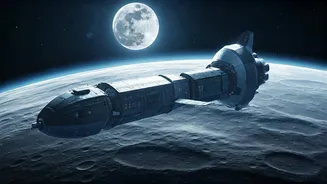
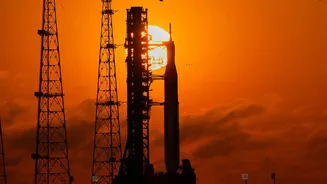
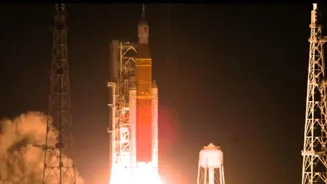
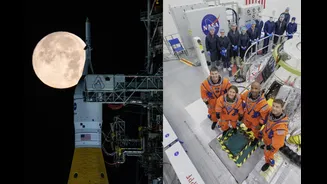
The upcoming Artemis II mission is poised to redefine how we experience space exploration, primarily through a dramatic advancement in communication technology.
This mission will transmit high-definition 4K video directly from the Moon, achieving data transfer rates of 260 megabits per second. This speed significantly surpasses what is typically available through many residential internet services, presenting a stark contrast to the low-resolution, static-laden transmissions that characterized early lunar missions like Apollo. Imagine watching the astronauts orbit the far side of the Moon with the visual fidelity akin to modern streaming services, a far cry from the grainy black-and-white images of the past. This isn't merely an incremental improvement; it represents a paradigm shift, transforming space voyeurism from a pixelated broadcast into an immersive, high-quality visual experience that brings the cosmos closer than ever before.
Laser Technology Revolution
The key to this extraordinary communication capability lies in a groundbreaking technology known as Optical to Optical (O2O), which utilizes laser-powered communication terminals. Instead of relying on conventional radio waves, O2O employs focused beams of infrared light. This sophisticated system, featuring a compact 4-inch telescope, establishes a direct link with ground stations located in California and New Mexico. By encoding mission data into laser pulses, it can transmit information at volumes exponentially greater than the radio systems used during the Apollo era. Project manager Steve Horowitz confirms that at 260 megabits per second, O2O is designed specifically for beaming 4K high-definition video back to Earth. The clarity will be so remarkable that the detailed visuals captured by the crew's Nikon cameras of the lunar surface would undoubtedly astonish astronauts from previous generations.
Experiencing Space Differently
This technological leap signifies more than just an upgrade; it heralds a cultural transformation in how the public engages with space missions. Gone are the days of straining to discern details in fuzzy, monochrome footage. With Artemis II, viewers will be able to observe the Moon's surface in sharp, vibrant color, comparable to the visual quality of contemporary entertainment platforms. However, the immutable laws of physics still apply. A notable limitation is the communication blackout that will occur when the Orion spacecraft passes behind the Moon. This orbital maneuver will interrupt the laser connection for a planned duration of 41 minutes, a period during which no amount of bandwidth can restore communication. This temporary silence is an inherent part of the mission's trajectory around the lunar body.
Future of Space Entertainment
The successful implementation of O2O technology on Artemis II promises to unlock a new era of space-related content that can rival terrestrial entertainment in its production value. Looking ahead, future missions to Mars could potentially stream live rover expeditions and astronaut activities with the visual richness and detail of a high-budget nature documentary. The Moon is set to evolve from a distant, static image in the sky into a dynamic and accessible destination that audiences can virtually explore. This vision of immersive space travel is contingent upon several factors, including favorable weather conditions at the desert-based ground stations and the laser's ability to maintain a stable lock on its target across the vast expanse of approximately 240,000 miles separating Earth and the Moon.