







Bone Density Loss
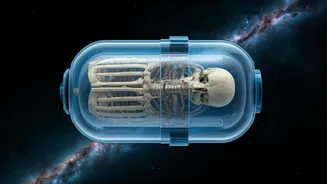
One of the most significant challenges of space travel is the loss of bone density. In the absence of gravity, astronauts experience a decrease in bone mass.
This is because bones, which are constantly being remodeled, don't need to support the body's weight in space. Consequently, they lose minerals and become weaker. This bone loss can lead to a higher risk of fractures and other skeletal problems. It is crucial to understand how the body is affected during long periods in space in order to develop effective countermeasures to mitigate these risks. The article does not state specific numbers on bone density loss.
Muscle Atrophy Concerns
Similar to bone density, muscle mass also diminishes in the weightless environment of space. Astronauts experience muscle atrophy, where their muscles weaken and shrink due to the reduced need for physical exertion. This loss of muscle mass affects overall strength and endurance. To combat this, astronauts engage in rigorous exercise routines aboard the International Space Station (ISS), using specialized equipment to maintain their physical fitness. The effectiveness of these measures, however, is a subject of ongoing study. The article does not offer more details on this topic.
Vision Changes Noted
Extended spaceflight can also impact vision. Astronauts have reported experiencing changes in their eyesight, including blurred vision and other visual impairments. These issues are thought to be linked to the redistribution of fluids in the body, which can affect the shape of the eyes and the pressure within the skull. Researchers are studying these changes to understand the underlying mechanisms and develop strategies to protect astronauts' vision during long-duration missions. The article does not specify other details in relation to this topic.
Other Physiological Effects
Besides bone density loss, muscle atrophy, and vision changes, space travel can affect various other physiological systems. The cardiovascular system is also impacted, with the heart potentially becoming less efficient due to the reduced workload in space. The immune system can also be weakened, making astronauts more susceptible to infections. Furthermore, astronauts may experience changes in their sleep patterns, and psychological effects related to isolation and confinement. The article offers no additional elaboration on the specifics of these conditions.
Returning to Earth
The return to Earth presents its own set of challenges. Upon reentry into Earth's gravity, astronauts have to readapt to the environment. They may experience difficulties with balance, coordination, and mobility due to the weakening of their bones and muscles in space. The article suggests that Sunita Williams and Butch Wilmore may face some difficulties in returning to earth. The process of readaptation can take time, and the recovery period depends on the duration of the spaceflight and the individual's physical condition. The article does not indicate the length of the recovery process.