






Understanding Shin Pain
Shin splints, medically termed posterior tibial stress syndrome, often stem from an underlying issue rather than being the primary problem. Muscles function
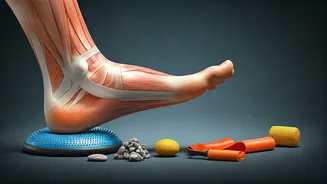
by creating movement through levers and pivot points. While concentric contraction involves a muscle shortening to move a limb, eccentric contraction occurs when a muscle lengthens under tension to control movement. This eccentric control, crucial for activities like lowering a weight slowly, places significant stress on muscles. For runners, the tibialis posterior muscle plays a vital role during ground contact, working eccentrically to manage the foot's inward rolling motion (pronation) as it meets the earth. The complexity of the foot, with its 26 bones, makes it a challenging structure to control. If the foot's intricate bone structure isn't managed effectively, the tibialis posterior is compromised, leading to strain, weakness, and pain along the shin, as it struggles to perform its intended function.
The Foot Control Solution
The key to resolving persistent shin pain lies not in treating the tibialis posterior muscle itself, but in addressing the root cause: inadequate foot control. When the foot lacks stability, it becomes a collapsing structure, forcing the tibialis posterior to overcompensate. A well-controlled foot acts as a stable platform, allowing this muscle to perform its role efficiently. True foot stability originates from the forefoot, particularly the big toe. By establishing strong control over the big toe, the entire forefoot becomes stable, which in turn stabilizes the rearfoot. This creates a solid foundation, freeing the tibialis posterior from excessive demands. Ultimately, improving the control and coordination within your feet is paramount to offloading the stressed muscles in your shins and preventing further injury.
Foot Control Drills
To enhance your foot's stability and combat shin splints, several targeted exercises can be integrated into your routine. The 'Foot Control Test' or 'Toe Yoga' involves standing and focusing on one foot at a time, lifting the big toe while keeping the other four toes down, then pressing the big toe down to lift the other toes. This movement should elevate the foot's arch without collapsing the ankle. If you struggle, practicing this motion, possibly with a visual cue like placing your heel against your ankle, can help retrain the pattern. For difficulty lifting the big toe, a resistance exercise using a ruler under the toe can isolate and strengthen the specific muscles responsible for big toe control, ensuring you're not engaging shin muscles. Building a 'tripod' of pressure – distributing weight across the inside ball of the foot, the outside ball of the foot, and the big toe – is fundamental for a stable forefoot.
Strength and Stability Exercises
Once you've established a baseline of foot control, incorporating dynamic exercises further strengthens your foundation. The 'Single-Leg Shoulder Press' involves standing on one leg, activating the forefoot tripod, and pressing a light weight overhead. This challenges your balance and requires your foot to maintain stability under external load, preventing you from leaning back on your heel. 'Tippy Twist' focuses on hip and core stability while balancing on one leg; the exercise involves bending forward and performing controlled hip twists. The key here is to keep the forefoot grounded, especially the big toe, to maintain balance and avoid wobbling. Finally, 'Foot Screws' are performed by standing on both feet with equal forefoot pressure. This exercise involves a controlled twisting motion of the rear foot while keeping the big toe firmly planted, then raising and lowering the heels, emphasizing the twist between the rear and forefoot rather than the height of the calf raise.