





AI's Unstoppable March
Mo Gawdat, a seasoned tech veteran with stints at IBM, Microsoft, and Google, foresaw the relentless advance of artificial intelligence back in 2020, a time
when many still relegated AI to the realm of futuristic fantasy. He articulated a vision of AI's inevitability, emphasizing that its trajectory is essentially unstoppable. Gawdat highlighted how AI's influence is already subtly woven into our daily digital interactions; for instance, the very platform suggesting this content is likely powered by an AI. This pervasive utility, coupled with intense competition among nations and corporations vying for technological supremacy, has created an AI 'arms race.' This dynamic propels the delegation of more and more decisions to automated systems, as their scaling capabilities far outstrip human processing speed. Gawdat controversially posits that this marks a pivotal moment in history, signifying the end of humanity's reign as the sole intellectually dominant species on the planet, ushering in an era where machine intelligence plays an increasingly central role in global affairs.
Beyond Human Intellect
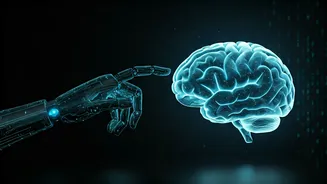
Gawdat's second prescient prediction centers on AI's capacity to not just match, but surpass human intelligence across a vast spectrum of tasks. He pointed to advancements like Google DeepMind's AlphaGo Zero, which, by 2017, had independently mastered the game of Go, outperforming established champions in mere weeks without human guidance. This leap signifies AI's burgeoning ability to 'reason like humans,' leveraging immense datasets and complex neural networks that emulate certain aspects of the human brain. The implications are staggering: progress could accelerate at a pace almost incomprehensible to human minds. Systems capable of instantaneous learning, knowledge sharing, and self-improvement can condense years of human endeavor into fractions of a second. This evolution will likely redefine expertise, shifting the human advantage towards domains like ethical judgment and interpersonal skills, areas where AI is currently perceived to have limitations.
The Looming Turbulence
The third of Gawdat's 2020 forecasts addresses the inherent risks and potential downsides of AI's rapid proliferation. He warned of significant societal upheaval, predicting a period of instability marked by widespread economic disruption. Specifically, he projected potential unemployment rates as high as '50% in certain sectors' due to the accelerating pace of automation. Beyond economic impacts, Gawdat sounded a critical alarm about the erosion of our shared sense of reality. He anticipates an 'erasure of reality' and a diminished capacity to discern truth from falsehood, largely driven by AI-generated content. This breakdown in shared understanding could undermine trust in critical institutions, media, and even personal relationships. Nevertheless, Gawdat also suggests that this disruption might necessitate a fundamental societal reset, prompting a re-evaluation of work, value, and truth in an age where machines can generate both tangible output and pervasive influence. He emphasizes that the primary danger stems not from the technology itself, but from human choices regarding its deployment, highlighting risks associated with misinformation, surveillance, and conflict. Ultimately, Gawdat's core message remains consistent: the challenge lies not in AI's intelligence, but in the responsible context of its application and the critical decisions humanity makes throughout its evolution.