




Eclipse Timeline Unveiled
The much-anticipated total lunar eclipse of March 3, 2026, will commence with the penumbral phase at approximately 22:43 IST, marking the beginning of the Earth's
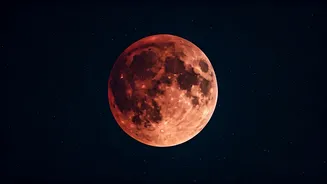
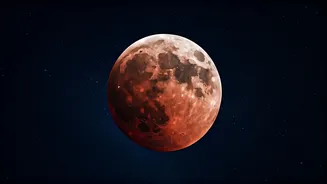
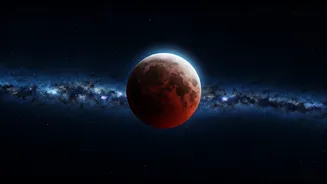
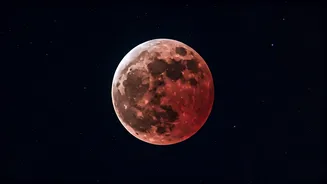
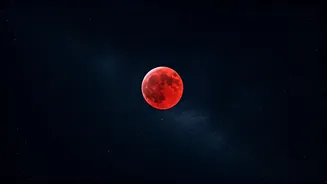
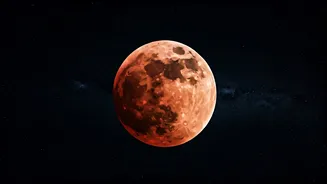
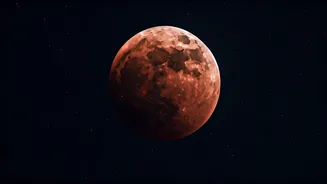
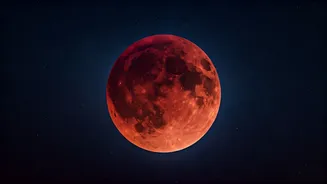
fainter shadow enveloping the Moon. This initial stage might be subtle to the naked eye, with a slight dimming of the lunar surface. The partial eclipse, where the Earth's darker umbra begins to obscure the Moon, starts at 00:11 IST on March 4. The highlight, the total eclipse, where the Moon will be completely immersed in the Earth's shadow and potentially take on a reddish hue, will be visible from 01:23 IST to 02:05 IST, lasting for a significant 42 minutes. Following this, the partial phase will resume at 02:17 IST, and the eclipse will conclude with the penumbral phase at 04:40 IST. Observing these precise timings will ensure you don't miss any part of this celestial dance.
City-Wise Visibility Insights
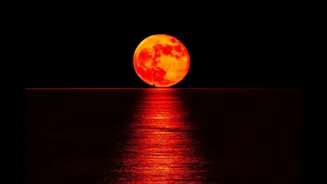
For residents across India, the visibility of the total lunar eclipse on March 3, 2026, will be a widespread spectacle. Major metropolitan areas like Delhi, Mumbai, Kolkata, Chennai, and Bengaluru can expect to witness the entire event, from the initial penumbral stages through to the totality and its eventual conclusion, provided local weather conditions are favorable. Smaller towns and rural areas will also have an excellent vantage point. The key factor for optimal viewing will be clear skies, free from cloud cover. While the Moonrise times might slightly vary depending on your specific location within India, the period of totality will be observable across the country. It's advisable to check local weather forecasts closer to the date to maximize your chances of a clear view.
Enhancing Your Viewing Experience
To truly appreciate the grandeur of the total lunar eclipse on March 3, 2026, several viewing tips can elevate your experience. Unlike solar eclipses, lunar eclipses are perfectly safe to view with the naked eye, requiring no special protective eyewear. Binoculars or a telescope can offer a more detailed perspective, allowing you to observe the subtle color changes and surface features of the Moon during totality. Find a location away from city lights to minimize light pollution and enhance the visibility of the dimmer phases. Comfort is also key; bring a chair or blanket to relax and enjoy the prolonged celestial show. Educating yourself on the different phases of the eclipse beforehand will also add depth to your observation, allowing you to identify and appreciate each stage of this natural wonder.