






Defining Checks and
The very essence of American democracy is interwoven with the concept of 'checks and balances,' a system strategically designed to prevent any single part
of the government from becoming too strong. This is achieved through a network of overlapping powers where each branch of government – the legislative (Congress), the executive (President), and the judicial (Supreme Court) – has certain authorities to limit the power of the other two. Each branch is entrusted with specific responsibilities, preventing them from overstepping their boundaries. This intricate setup is fundamentally important to protect individual liberties and prevent the tyranny of the majority or any other form of autocratic rule. This structural design is what sets the American system apart and ensures the government stays accountable to the people and upholds the principles of the constitution.
The Legislative Branch
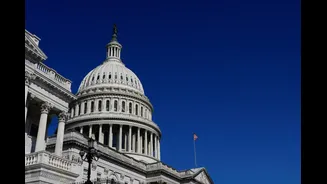
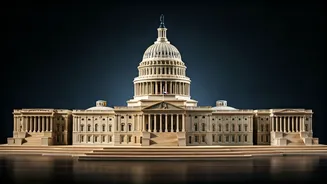
Congress, the legislative branch, holds the primary responsibility of making laws. This body is composed of the Senate and the House of Representatives, each operating under specific rules and procedures. The House, representing the population, initiates revenue bills and can impeach federal officials. The Senate, with equal representation for each state, confirms presidential appointments and can try impeached officials. Congress's power extends to declaring war, regulating commerce, and controlling the federal budget. Checks on Congress include the President's power to veto legislation and the Supreme Court's power to declare laws unconstitutional. This creates a cycle where bills are proposed, debated, amended, and voted on, often requiring compromise and negotiation to ensure laws pass both chambers.
The Executive's Role
The President leads the executive branch, responsible for enforcing laws passed by Congress. This involves overseeing numerous federal agencies, issuing executive orders, and acting as commander-in-chief of the armed forces. The President proposes the federal budget and can veto legislation. However, the President's power is balanced by the checks imposed by other branches. Congress can override a presidential veto with a two-thirds vote, and the judiciary can review the President's actions for constitutionality. The President also appoints federal judges, but these appointments are subject to Senate confirmation. These constraints prevent the President from acting unilaterally, ensuring that all actions are subject to legal and political scrutiny.
Judicial Branch Review
The judicial branch, headed by the Supreme Court, interprets laws and ensures they align with the Constitution. The Supreme Court reviews cases that come up through the federal court system, which includes district courts and courts of appeals. This branch has the power of judicial review, meaning it can declare laws or actions of the executive branch unconstitutional. Justices are appointed for life, which provides a level of independence. The judicial branch, in turn, is checked by the other branches. The President appoints justices (subject to Senate approval), and Congress can impeach and remove federal judges. The judicial branch’s decisions, however, must be enforced by the executive branch, requiring inter-branch cooperation to maintain the rule of law.
The Importance of
The system of checks and balances prevents the consolidation of power, thus protecting individual rights and liberties. By ensuring each branch can limit the power of the others, this structure maintains the balance of power and prevents any single part from becoming overly dominant. This approach fosters cooperation and negotiation, preventing legislative gridlock or executive overreach. The system provides a framework for addressing grievances, as citizens can seek recourse in the courts or petition their elected representatives. A well-functioning democracy demands active participation and an informed citizenry. A populace that is aware of how their government operates, and the roles of each of its branches, is key to the success of such a system.