


Cream Basics Explained
At its core, cream is about fat content providing texture and stability. Dairy whipping cream, derived from cow's milk, must contain at least 30% milk fat.
This fat is crucial for creating that desirable airy, cloud-like consistency when whipped, as air becomes incorporated into the fat molecules. Heavy or whipping cream typically boasts around 36% milk fat, making it a versatile choice for culinary applications requiring volume and structure. In contrast, non-dairy cream is a manufactured product, primarily composed of water, hydrogenated vegetable oil, and corn syrup, often enhanced with stabilizers and emulsifiers. Its design is to closely mimic the look and function of dairy cream, offering superior stability, especially in warmer climates, and holding intricate decorations with remarkable resilience, which explains its widespread use in many professional bakeries.
Spotting the Difference
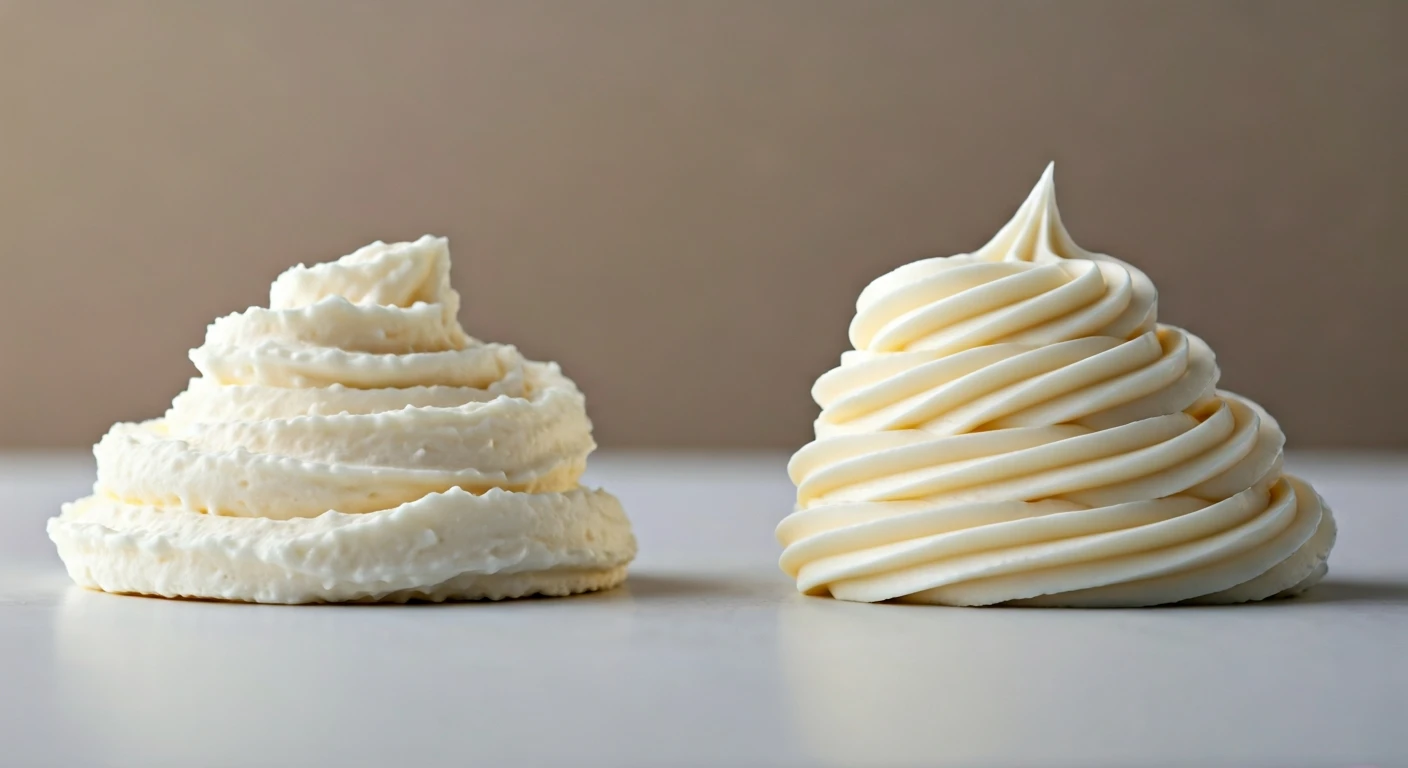
Distinguishing between dairy and non-dairy cream doesn't require a professional lab; simple observation and sensory tests suffice. A dairy cream typically presents a lighter, mildly sweet flavor that complements the cake without overpowering it, leaving a clean, milky aftertaste. Its mouthfeel is airy and soft, melting quickly and leaving a fresh sensation. Visually, it often has a slightly matte finish. Non-dairy cream, conversely, tends to be significantly sweeter, sometimes with an artificial or overly creamy taste and an oily or waxy residue on the tongue. Its texture is denser and more structured, not melting as readily. Its appearance is often glossy and plastic-like, with piping that looks remarkably crisp and architectural. Furthermore, real cream melts almost instantly upon skin contact, while non-dairy versions feel firmer and waxy. Ingredient labels are also a giveaway: dairy cream will be listed as 'cream' or 'dairy,' whereas non-dairy alternatives often feature 'vegetable fat,' 'stabilisers,' 'non-dairy topping,' or specific oils like palm oil.
Bakery Preferences Unveiled
Most Indian bakeries opt for non-dairy cream primarily due to practical considerations, especially concerning climate and logistics. Non-dairy whipped cream offers superior stability and longevity, holding its shape and preventing melting or weeping even in high temperatures, which are common in India. This resilience is vital for cakes that need to be transported across the city or displayed for extended periods without refrigeration. Dairy cream, while offering a superior taste and texture for some, is far more sensitive to heat and requires constant temperature control. Non-dairy alternatives also excel at maintaining intricate piping and decorations, allowing for the elaborate cake designs often seen in modern bakeries. From a business perspective, non-dairy options are also more cost-effective and easier to manage in busy kitchen environments, making them a practical choice for volume production. For individuals with lactose intolerance or dairy allergies, non-dairy cream also presents a viable and often more comfortable alternative.