



Tiny Titans of Tenacity
Many young animals exhibit a profound instinct to remain physically attached to their mothers, a behavior crucial for their early development and survival.
This close proximity ensures they receive essential warmth, protection from predators, and nourishment. For instance, baby monkeys are rarely seen apart from their mothers, clinging tightly to their fur for security and to learn vital life skills through constant observation. This early dependency fosters strong bonds and prepares them for eventual independence. This inherent need for closeness is not just about safety; it's a fundamental aspect of their upbringing, shaping their social behaviors and their understanding of the world around them. The intense physical contact during this formative period is a cornerstone of their maturation process, ensuring they grow into capable adults.
Koala's Cozy Embrace
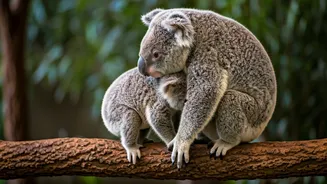
Koalas, iconic marsupials of Australia, are celebrated for their arboreal lifestyle and their remarkable ability to cling. While adult koalas often grip tree trunks with their powerful claws, it's the baby koalas, known as joeys, who truly embody clinginess. For months on end, a joey will remain nestled securely in its mother's pouch and then firmly attached to her back or belly, rarely venturing far. This prolonged period of physical contact is vital for the joey's development, allowing it to stay warm, safe, and close to its mother's milk supply. The act of clinging is not merely passive; it's an active posture that conserves energy and allows the mother to move through her environment while keeping her offspring secure. This deep-rooted attachment highlights the importance of maternal care in the survival of these unique creatures.
Octopus's Gripping Charm
In the aquatic realm, the octopus stands out with its extraordinary ability to cling using its numerous, powerful suction cups. These intelligent cephalopods don't just adhere to surfaces for stability; they often use their flexible arms to explore their surroundings by wrapping them around rocks, coral, or even passing objects and creatures, including humans. This investigative behavior, akin to a tactile form of curiosity, demonstrates a unique kind of clinginess driven by exploration and sensory engagement. Their ability to anchor themselves securely allows them to navigate complex underwater environments and ambush prey. The intricate network of suckers provides a remarkable grip, showcasing an evolutionary adaptation that is both functional and fascinating, allowing them to manipulate their environment with precision.
Panda's Affectionate Hold
Giant panda cubs are renowned for their incredibly endearing and clingy nature. From birth, they are utterly dependent on their mothers, often latching on tightly to their fur for comfort and security. This close physical bond continues even as they grow, with panda cubs frequently seen embracing their mothers or caretakers, displaying a deep-seated attachment. This behavior is not just a sign of their immaturity but also reflects their social disposition, as they are known to be quite affectionate creatures. The physical closeness provides warmth and reassurance, contributing to their healthy development and fostering strong familial relationships within the species. Their cuddly demeanor and insistence on staying close are hallmarks of their gentle nature.
Sea Otter's Anchored Drifts
Sea otters have developed some particularly charming and practical methods for staying together and secure. When resting or sleeping, they are often observed holding hands (or paws) with their companions, a heartwarming behavior designed to prevent them from drifting apart in the water currents. Furthermore, they employ a clever strategy of wrapping themselves in kelp, using the strong, flexible seaweed as an anchor to keep them tethered to a particular spot. This 'clinginess with purpose' ensures that they remain together as a group and don't get separated, which is vital for their safety and social cohesion. This dual approach of interpersonal connection and environmental anchoring demonstrates their ingenious adaptations to marine life.
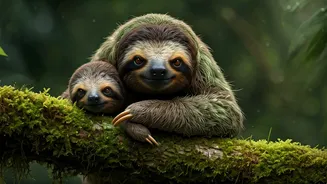
Sloth's Life of Hanging
Sloths lead a lifestyle that is intrinsically defined by clinging. Spending the vast majority of their lives suspended upside down from tree branches, their specialized claws are perfectly adapted for maintaining a secure grip. This constant act of hanging is not just a passive state but a fundamental aspect of their survival, allowing them to forage, sleep, and even give birth while attached to their arboreal home. Their slow metabolism and energy-conserving lifestyle are directly supported by their ability to remain steadfastly anchored. In some instances, this clinging extends to social interactions, with sloths sometimes found in close proximity, hanging near each other, further emphasizing their unique, gravity-defying existence.