






Types of Eclipses
Solar eclipses occur when the Moon passes between the Sun and Earth, blocking the Sun's light. There are three main types: total, partial, and annular.
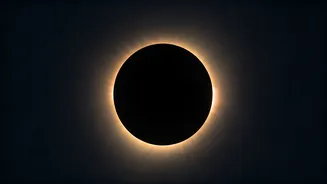
During a total solar eclipse, the Moon completely covers the Sun's disk, revealing the Sun's corona—its outer atmosphere. In India, people may experience a total solar eclipse, a partial solar eclipse, or an annular solar eclipse. A partial solar eclipse happens when the Moon only partially covers the Sun. Annular eclipses, also known as 'ring of fire' eclipses, happen when the Moon is farther from Earth, appearing smaller, and doesn't fully cover the Sun, leaving a bright ring visible. Understanding the type of eclipse is crucial for safety, as looking directly at the Sun during any eclipse phase, except the brief totality of a total solar eclipse, can cause severe eye damage.
Safe Viewing Practices
Protecting your eyes is the most important thing when watching a solar eclipse. Never look directly at the Sun without proper eye protection. Safe viewing methods include using eclipse glasses that meet the ISO 12312-2 international safety standard. These glasses are specifically designed to filter out harmful ultraviolet and infrared radiation, as well as intense visible light. Alternatively, you can use a handheld solar viewer or project the Sun's image onto a surface using a pinhole projector. It’s also recommended to supervise children closely during an eclipse. Regular sunglasses, no matter how dark, are not safe for viewing a solar eclipse and will not protect your eyes from damage. When using eclipse glasses, check them for any scratches or damage before use and discard them if damaged.
Upcoming Eclipses
India is set to experience several solar eclipses in the coming years. Planning ahead is key to witnessing these events. The first solar eclipse of 2026 will be a notable event. Keep an eye on the astronomical calendar for specific dates and times, and for the areas in India from which the eclipses will be visible. The visibility will depend on your location within the country. Make sure to stay informed about the eclipse path to know when and where the eclipse will be best viewed. This includes the date, time, and type of eclipse. Plan to arrive at your viewing location well in advance to set up and prepare. Local astronomical societies and online resources often provide valuable information and guidance on viewing eclipses safely. Always prioritize safety and enjoy the marvel of these celestial events responsibly.
Common Questions Answered
People frequently ask whether solar eclipses are dangerous and how best to view them. Looking directly at the Sun, even during an eclipse, can cause solar retinopathy, which leads to permanent damage to the retina. It’s vital to use safe viewing methods like eclipse glasses or pinhole projectors. Another common query revolves around the rarity of eclipses. While solar eclipses happen somewhere on Earth about every 18 months, the total solar eclipses are rarer in any particular location. Many wonder about the 'ring of fire' effect, which occurs during an annular eclipse, where the Moon doesn't completely cover the Sun. The Sun then appears as a bright ring around the Moon. Annular eclipses and the partial phases of all eclipses require the same safe viewing precautions as any other time when observing the Sun.