



BNP Secures Landslide Victory
Bangladesh's 13th parliamentary elections have concluded with a resounding endorsement for the Bangladesh Nationalist Party (BNP), which has claimed a substantial
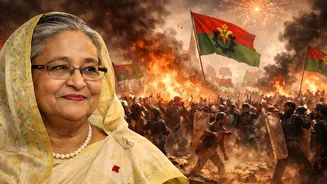
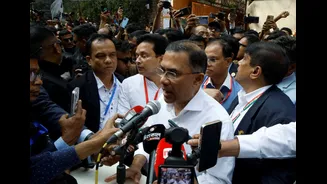
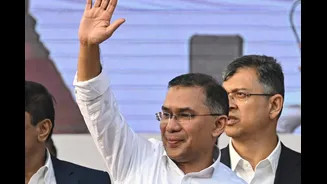
two-thirds majority. This electoral outcome marks a significant political transition, occurring for the first time since the departure of Sheikh Hasina. Under the leadership of Tarique Rahman, the BNP-led alliance has secured an impressive 216 out of the 300 available seats, paving the way for Rahman's ascent to the role of Prime Minister. Trailing in second place was Jamaat-e-Islami, amassing 76 seats, while the National Citizens Party (NCP), a student-backed group that played a role in the preceding political transitions, managed to win only six seats. The analysis of these results has been a focal point, particularly concerning their implications from India's perspective and their broader effect on regional dynamics. The substantial mandate for the BNP suggests a public inclination towards established political forces and a preference for stability over untested ideological experiments, as indicated by the limited success of newer political entities like the NCP.
Jamaat's Border Gains
A primary point of strategic concern emerging from the election results is the performance of Jamaat-e-Islami in constituencies situated along the India-Bangladesh border. While the party did not achieve a majority, a notable cluster of its 76 seats are concentrated in districts that share boundaries with India's West Bengal, Assam, Meghalaya, Tripura, and Mizoram. For instance, Jamaat captured all four seats in Satkhira, which borders West Bengal, and secured three out of four seats in Kushtia and Bagerhat. Victories were also registered in other border areas such as Rangpur, Sherpur, Naogaon, Joypurhat, and Gaibandha. These gains are being meticulously monitored in India due to historical concerns surrounding these regions, including allegations of infiltration, radical activities, and cross-border smuggling. The concentration of Jamaat's success in these sensitive areas amplifies India's focus on the evolving security landscape and potential cross-border challenges.
Minority Representation and Rhetoric
The electoral process unfolded against a backdrop of reported tensions affecting minority communities in Bangladesh. Despite these challenges, a significant development was the election of Gayeshwar Chandra Roy, a BNP leader and a Hindu candidate, from Dhaka. Roy achieved a notable victory, defeating his Jamaat rival by a substantial margin of one lakh votes, marking him as the first Hindu to win from the capital. Conversely, Jamaat's sole Hindu candidate, Krishna Nandi, contesting from Khulna-1, was unsuccessful in his bid. The campaign period was also characterized by hardline rhetoric from some quarters. Notably, Jamaat leaders, including Mamunul Haque from Dhaka-13, made controversial statements targeting Hindus and India; Haque himself lost his seat. The party's chief, Shafiqur Rahman, also alluded to themes of Islamic revolution during his campaign. Nevertheless, the overall electoral verdict prevented Jamaat from securing any form of majority power, indicating that the electorate prioritized stability and governance over potentially divisive ideological platforms.
Tarique Rahman's Return and India Ties
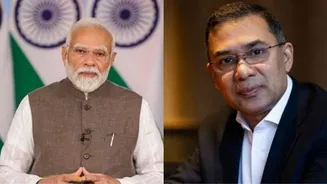
A pivotal aspect of the political shift is the return of Tarique Rahman, son of former President Ziaur Rahman and former Prime Minister Khaleda Zia, to Bangladesh in December 2025 after a prolonged period of 17 years in exile. This election marks his first electoral contest upon his return, and he is now poised to assume leadership of the government as Prime Minister. During his campaign, Rahman articulated a vision for bilateral relations with India centered on "mutual respect and understanding." Following the announcement of the election results, the Prime Minister of India extended congratulations to Rahman, and diplomatic exchanges between the two nations have continued. This engagement includes a prior meeting in Dhaka between Rahman and India's External Affairs Minister, S. Jaishankar, which took place shortly after the passing of Khaleda Zia on December 30. The renewed diplomatic ties and Rahman's stated intentions suggest a focus on strengthening bilateral cooperation and addressing shared regional interests.