



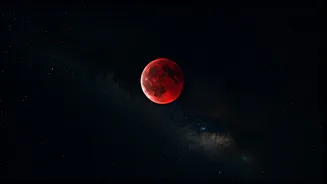
The Science of Blood Moons
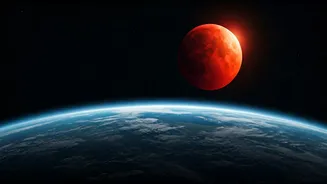
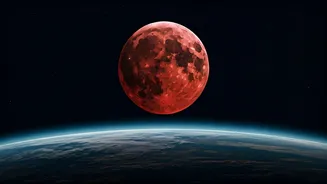
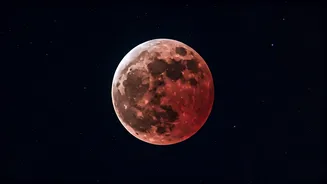
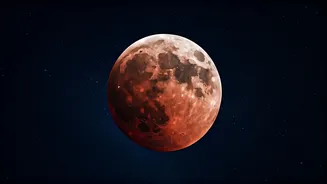
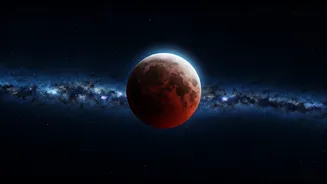
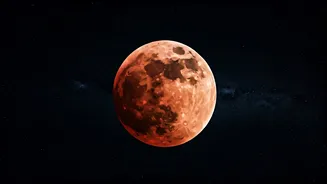
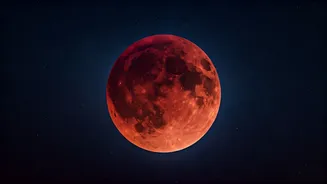
A total lunar eclipse occurs when our planet, Earth, perfectly aligns between the Sun and the Moon, casting its shadow onto our celestial neighbor. While
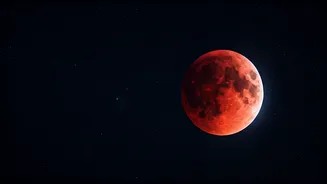
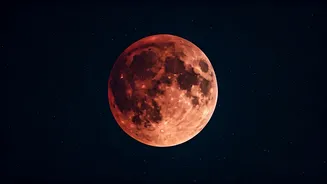
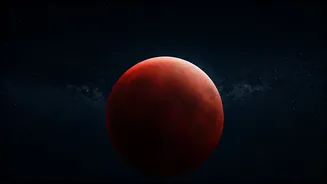
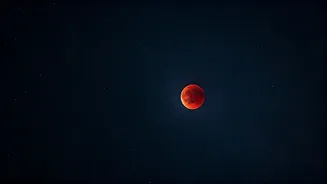
Earth's shadow blocks direct sunlight, a portion of sunlight still filters through our atmosphere. This atmospheric filtering process is what gives the Moon its distinctive reddish hue. Think of it like this: Earth's atmosphere acts like a lens, scattering away shorter, bluer wavelengths of light and allowing the longer, redder wavelengths to pass through and illuminate the Moon. This phenomenon is why the eclipsed Moon is often referred to as a 'blood moon,' a truly awe-inspiring sight that happens not every month, but on specific, noteworthy occasions, making it a special event for stargazers.
India's Eclipse View
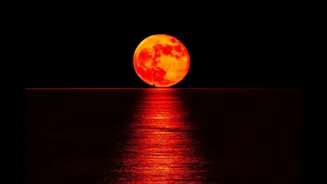
For sky gazers in India, the March 3, 2026, total lunar eclipse will be experienced under 'moonrise eclipse' conditions. This means that the eclipse will already be in progress by the time the Moon becomes visible above the horizon in various parts of the country. Consequently, the initial phases of the eclipse won't be observable from India. Instead, viewers will begin to see the eclipse once the Moon has risen, with the duration and timing of visibility differing across different cities. For instance, in Delhi, moonrise is expected around 06:22 PM, in Lucknow at 06:02 PM, Chennai at 06:21 PM, and Hyderabad at 06:26 PM, marking the commencement of the observable eclipse for each location.
Eclipse Timing Details
The much-anticipated total lunar eclipse is scheduled for March 3, 2026. The celestial event will span from approximately 03:20 PM to 06:47 PM. Within India, the Moonrise visibility, which signifies when the eclipse begins to be seen, is expected around 06:26 PM. The peak of the eclipse, where the Moon will be most deeply immersed in Earth's shadow and likely display its most intense 'blood moon' color, is anticipated between 06:33 PM and 06:40 PM. The entire eclipse will conclude by 06:47 PM, making the post-moonrise period the prime time for Indian observers to witness this cosmic display. This timing ensures that even with the 'moonrise eclipse' circumstance, a significant portion of the dramatic event will be visible.
Global Visibility Snapshot
While India experiences the 'blood moon' phenomenon during its moonrise, other parts of the world will have different viewing opportunities. In North America, for example, the eclipse will be visible in the early morning hours of March 3rd. Los Angeles residents can expect to see it around 3:04 AM, Denver at 4:04 AM, Chicago and St. Louis at 5:04 AM, and New York and Washington D.C. at 6:04 AM. These timings highlight the global nature of this astronomical event, with different regions experiencing different phases and optimal viewing windows. This broad visibility makes it a shared celestial experience across multiple continents, captivating astronomers and casual observers alike.