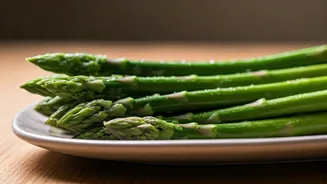







Effortless Preparation
Achieving perfectly steamed asparagus begins with proper preparation. Start by selecting fresh asparagus, ideally in season from February to June, characterized
by firm stalks and tightly closed tips for maximum crispness. Gently rinse the spears under cool water to remove any grit. To ensure tenderness, it's crucial to remove the woody ends; you can achieve this by bending each spear until it naturally snaps at the point where the tough fibers begin, or by using a knife to trim off about 1 to 2 inches from the bottom. For exceptionally thick stalks, a vegetable peeler can be used to shave off the outer layer, minimizing waste while ensuring a more pleasant texture. This careful trimming guarantees that every bite will be enjoyable, making the steaming process even more effective.
The Science of Steaming
Steaming asparagus is a culinary marvel that preserves its natural essence through efficient heat transfer. The process involves placing a small amount of water, approximately one inch, into a saucepan, ensuring it remains below the level of the steamer basket. This setup allows the asparagus to cook in the rising steam, not directly in water, which is key to its success. Covering the pot with a lid is essential; it traps the hot vapor, creating an environment where heat is rapidly and evenly distributed throughout the spears. This method gently softens the fibrous texture of the asparagus within a mere 2 to 4 minutes, transforming it into a tender-crisp delight without overcooking the exterior. The rapid steam transfer also plays a vital role in maintaining the asparagus's vibrant green hue by limiting the breakdown of chlorophyll, preserving its visual appeal.
Flavorful Enhancements
While steamed asparagus is delightful on its own, it offers a versatile canvas for a variety of flavor enhancements. A simple post-cooking seasoning of salt and freshly ground black pepper is often enough to bring out its natural sweetness. For added richness and depth, a drizzle of melted butter or good quality olive oil complements the vegetal notes beautifully. A squeeze of fresh lemon juice or zest provides a bright, acidic counterpoint that cuts through any subtle bitterness and elevates the overall taste profile. Consider incorporating aromatic elements such as sautéed minced garlic tossed with the warm asparagus. For a more decadent experience, a topping of grated Parmesan or Pecorino Romano cheese adds a salty, nutty dimension. A touch of sweetness can be achieved with a balsamic glaze, or for a truly elegant finish, a classic hollandaise sauce transforms this simple vegetable into a sophisticated side dish.
Variations & Substitutions
This steamed asparagus recipe is wonderfully adaptable, allowing for experimentation with different asparagus varieties and flavor pairings. Green asparagus, the most common, offers a fresh, grassy taste. White asparagus, cultivated without sunlight, presents a milder, more delicate flavor. Purple asparagus, while slightly sweeter due to its higher sugar content, will turn green upon cooking as its pigments degrade. Beyond the vegetable itself, the seasoning and flavoring can be significantly altered. Instead of lemon, try a simple balsamic vinaigrette or an Italian dressing for a tangy kick. Minced garlic sautéed in olive oil or butter can be stirred in for an aromatic boost. Adding a sprinkle of finely grated Parmesan or Pecorino Romano cheese introduces a savory, umami depth. These variations ensure that steamed asparagus remains an exciting and versatile component of any meal, catering to diverse palates and culinary preferences.
Meal Prep & Storage
Steamed asparagus is an excellent candidate for meal preparation, offering a healthy and convenient side dish that can be enjoyed throughout the week. To halt the cooking process immediately after steaming and preserve its crisp texture, transfer the spears to an ice-water bath. Once cooled, drain them thoroughly and store in an airtight container in the refrigerator. They will keep well for 3 to 5 days. For longer storage, asparagus can be frozen for up to 2 months. Reheating is simple and quick; microwave the asparagus in 15 to 30-second increments until warmed through. It's important to note that for the best flavor, it's recommended to season the asparagus after reheating, especially if it was stored plain. This makes it easy to add fresh seasonings right before serving.