





Consciousness's Quantum Connection
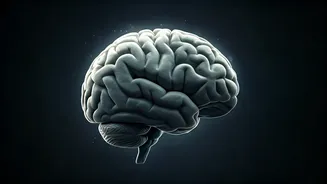
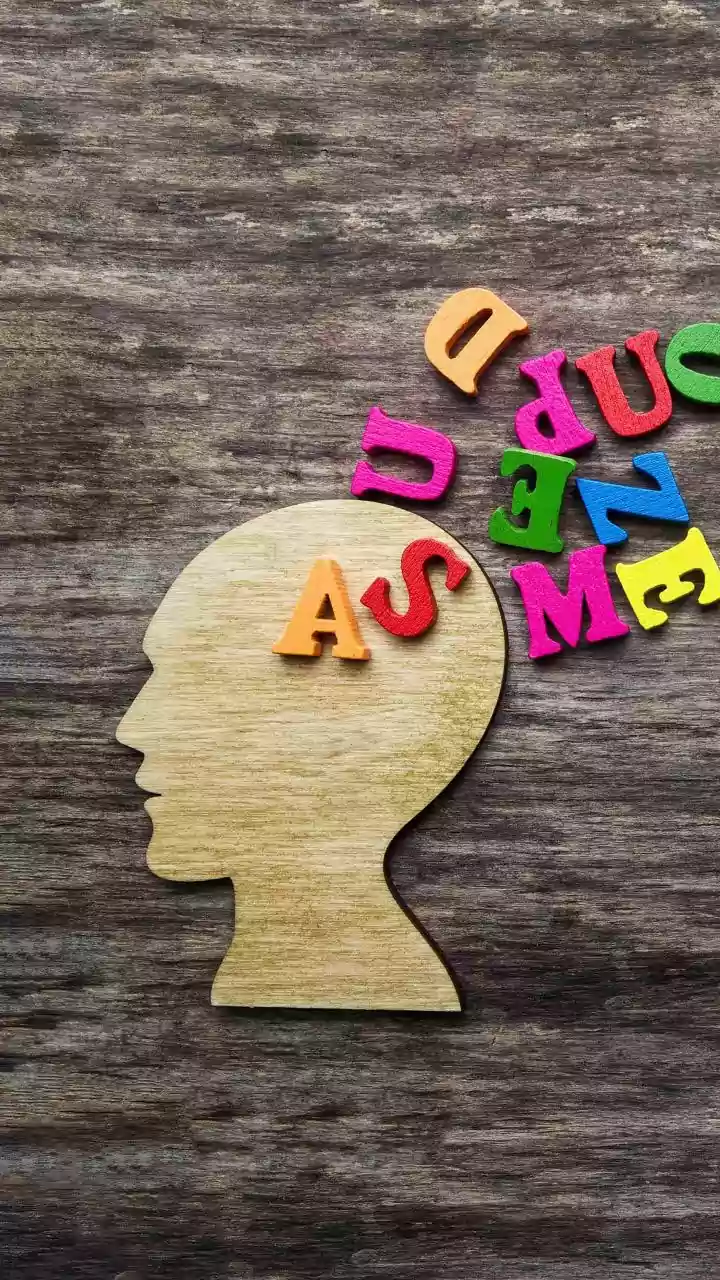
The enigmatic nature of consciousness, responsible for everything from fleeting thoughts to profound insights, remains a frontier in scientific understanding.
A quantum physicist proposes a radical link: our consciousness might operate on principles observed in quantum mechanics. This theory posits that biological limitations hinder human creativity, but by harnessing quantum phenomena, we could potentially access previously hidden dimensions of our existence and become 'enhanced humans.' The core idea draws inspiration from the work of physicists like David Bohm and Niels Bohr, who suggested that quantum mechanics' fundamental features, such as superposition and entanglement, mirror the brain's intricate workings. This perspective challenges conventional neuroscience by suggesting a quantum underpinning for our subjective experience and decision-making processes.
The Double-Slit and Thought
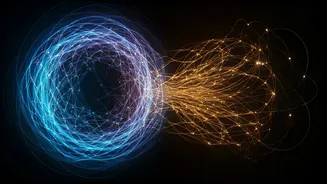
The famous double-slit experiment offers a tangible glimpse into quantum weirdness, demonstrating that particles can exist in multiple states simultaneously—a phenomenon called superposition. When observed, this wave-like behavior collapses into a single, particle-like state. This duality remarkably parallels human cognition. Our decision-making process often involves exploring multiple possibilities simultaneously, akin to a quantum object passing through both slits. This 'wandering mind' state, where various thoughts coexist without a definitive outcome, mirrors the wave-like behavior observed in quantum experiments. However, the moment we settle on a distinct thought or decision, much like observing the particle's path, this superposition collapses, limiting further exploration of alternative outcomes. This interplay between simultaneous possibilities and definitive choices suggests a deep resonance between quantum physics and our internal mental landscape.
Quantum Brain Hypothesis
Extending these observations, the hypothesis suggests that our consciousness is essentially a vast network of interconnected quantum double-slit experiments operating within the brain's circuitry. This intricate system, where outcomes from one quantum process feed into others, creates a compounding effect. Interactions can become entangled, behaving in perfect synchronicity. When we contemplate, we might transition from a definite state to a superposition of thoughts—like deciding on a room renovation and then exploring various paint colors. Introspection then causes this superposition to collapse into another definite outcome, which then expands into a new superposition, perpetuating a cycle. This model offers a compelling explanation for the interplay between our conscious (definite) and subconscious (interference of thoughts) states, framing our comprehension as a computational process that fluidly switches between logical and intuitive pathways, akin to particles and waves.
AI vs. Enhanced Creativity
The parallel processing power of the subconscious, where consciousness exists in multiple states simultaneously, is believed to be the wellspring of human creativity. This is a stark contrast to artificial intelligence, which operates on strictly defined logical sequences. AI, however complex, lacks the quantum uncertainty that fuels human ingenuity. Flashes of genius and novel ideas often emerge unexpectedly when the mind is relaxed, a phenomenon absent in AI's deterministic operations. This suggests that our biological limitations might be restricting our creative potential. The theory proposes that the timing of our introspection might abbreviate the crucial periods of intuitive thought, limiting our capacity for groundbreaking originality. This prompts the question: could quantum technologies be employed to extend these intuitive, wave-like processing periods within our brains?
Quantum Chips for Cognition
Inspired by philosophical explorations of consciousness alteration, the vision is to develop quantum chips capable of enhancing human cognitive abilities. Rather than relying on external substances, these chips would interface with biological components in the brain. The proposed technology aims to suppress the 'noise' that triggers introspection, thereby extending the interference period for intuitive thoughts to fully develop. This could lead to a far more profound transformation than previously imagined. The crucial first step involves identifying and understanding how superpositions are stored and manipulated within the brain. While structures like microtubules are being investigated for their potential role, definitive evidence linking them to quantum interference is still pending. Once this biological mechanism is deciphered, a quantum chip could theoretically upload and sustain superposition states, shielding them from premature collapse and amplifying our creative, wave-like thinking.
The Future of Humanity?
The implications of achieving quantum-enhanced consciousness are immense, potentially leading to qualitative shifts in human perception rather than mere quantitative improvements in processing speed. Such an advancement could unlock entirely new realms of reality, making us fundamentally different from our current selves—perhaps akin to the evolutionary leap from apes to humans. Quantum-enhanced individuals might perceive dimensions of existence currently inaccessible to ordinary humans. While this remains a speculative yet exciting prospect, only time and further scientific exploration will reveal whether this ambitious vision of expanding consciousness through quantum physics will become a reality, heralding a new era for our species.