





Northern Europe's Digital Leap
A significant push towards enhancing digital connectivity is underway in Northern Europe, spearheaded by a consortium known as IOEMA 1 Holding. This group
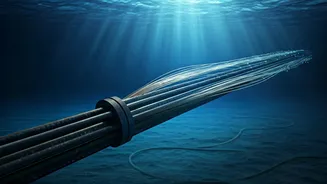
has forged a key alliance with APTelecom, an advisory firm, to accelerate the development of a groundbreaking subsea cable system capable of handling petabit-class data transmission. This planned network is envisioned as a 24-fiber-pair infrastructure, stretching approximately 1,600 kilometers across five key Northern European countries: the Netherlands, Germany, Denmark, Norway, and the United Kingdom. The strategic aim is to forge robust digital links between major hubs in these nations. Anticipation is high, with the consortium projecting that this crucial underwater cable infrastructure will be fully operational and ready to serve users by the first quarter of 2029, marking a substantial upgrade to the region's digital capabilities and resilience.
Pioneering Fiber Technology
In parallel, groundbreaking advancements in subsea cable technology are emerging from Japan. Corporations like NEC and NTT have successfully conducted trials of a revolutionary submarine cable system utilizing 12-core multicore fiber. This innovative design is a significant departure from conventional single-core fiber, which typically supports only one optical signal transmission path. The new multicore fiber, however, ingeniously packs twelve distinct optical signal transmission paths within a standard outer diameter, drastically increasing potential data throughput. During their trials, the Japanese team achieved an astonishing transmission of hundreds of terabits over an extensive distance of 7,280 kilometers. A sophisticated algorithm was instrumental in overcoming the persistent challenge of crosstalk interference between these densely packed cores, ensuring signal integrity. NEC developed a specific demodulation algorithm employing MIMO technology to accurately distinguish and separate overlapping signals, while NTT simultaneously engineered a specialized coupled multicore fiber transmission line to manage variations in signal delay across the multiple cores.
Global Connectivity Drive
The drive for enhanced subsea infrastructure is a global phenomenon, with major tech players like Meta actively investing in building extensive subsea networks worldwide to manage the immense data flow generated by billions of users daily. These massive undertakings require a dedicated team of submarine cable system engineers who oversee the entire project lifecycle. Their responsibilities are comprehensive, encompassing critical areas such as predicting future bandwidth needs, meticulously designing cable routes, conducting thorough ocean surveys to assess seabed conditions, closely monitoring the manufacturing process of the cable components, and formulating effective deployment strategies. With over 95% of all intercontinental internet traffic currently relying on subsea cable systems, ensuring unwavering reliability is not just a goal but an absolute necessity for an organization operating at Meta's colossal scale. The company is actively developing a new subsea cable system, dubbed 'Sea Connect,' which is set to become the longest such system globally.
Challenges and Timelines
While the advancements in subsea cable technology are impressive, each of these ambitious projects navigates a unique set of technical and financial obstacles, all within their own specific development timelines. The revolutionary Japanese technology has proven its feasibility in successful demonstrations, yet its widespread commercial deployment at scale remains to be fully validated. European infrastructure projects, on the other hand, frequently encounter regulatory hurdles and bureaucratic processes that can extend target completion dates by several years beyond initial projections. Similarly, Meta has not yet provided definitive public commitments regarding a specific completion date or the exact petabit capacity for its 'Waterworth' project. The urgent and growing demand for bandwidth, particularly driven by the explosion of artificial intelligence applications, presents a pressing need for network operators. However, the inherent nature of subsea cable development means that typically, it takes between five to seven years from the initial planning stages to the actual operation of the cable system underwater, a testament to the complexity and scale of these vital digital arteries.