






Evolving Disease Landscape
India is witnessing a significant transformation in its disease epidemiology directly linked to climate change. The increasing frequency and intensity
of extreme weather events, such as intense floods and prolonged heatwaves, are creating immediate and lingering health hazards. Flooding incidents are directly correlated with a rise in water-borne illnesses like cholera and hepatitis, while periods of extreme heat lead to a surge in cases of dehydration, heatstroke, and heightened cardiovascular stress. Beyond these acute issues, the changing climate is also expanding the geographical reach of vector-borne diseases. Warmer temperatures and unpredictable rainfall patterns are enabling pathogens carried by mosquitoes and other vectors to thrive in previously unaffected territories. This means diseases like dengue and malaria are now being reported in areas like Shimla, parts of Jammu & Kashmir, and the lower Himalayan regions. Pune, for instance, has been identified as a significant hub for dengue outbreaks, with projections indicating a continued upward trend. Furthermore, non-communicable diseases are also showing a concerning connection to climate-induced stress. Extended exposure to high temperatures has been associated with an increase in cardiovascular mortality. Simultaneously, the exacerbation of air pollution, a known consequence of climate shifts, contributes to a greater prevalence of respiratory ailments and chronic health conditions. The report aptly characterizes climate change as a 'health-risk multiplier,' intensifying the overall disease burden and placing unprecedented pressure on the nation's healthcare systems.
Disproportionate Impact
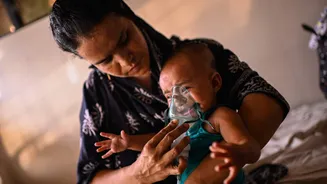
The health repercussions of climate change in India are not uniformly distributed, with vulnerable populations bearing the brunt of these challenges. Rural communities, individuals engaged in informal labor, women, and children are identified as groups facing the most substantial risks. These demographics often possess the fewest resources to withstand climate-related disruptions, thereby exacerbating existing social and economic disparities. For instance, extreme heat significantly diminishes the productivity of outdoor workers and elevates their health risks. In 2021 alone, an estimated 160 billion labor hours were lost in India due to heat exposure, as noted by the report. Women and children are particularly susceptible to climate-driven health issues. Research indicates that exposure to extreme heat during pregnancy increases the likelihood of preterm birth by 16%, with the risk escalating with every degree Celsius rise in temperature. Air pollution, especially fine particulate matter (PM2.5), is also linked to serious pregnancy complications such as hypertensive disorders and pre-eclampsia, alongside an increase in gestational blood pressure. Young children, with their limited capacity for thermoregulation, are more prone to heat stress, dehydration, and respiratory infections. Moreover, exposure to polluted air in early life is associated with low birth weight, asthma, and impaired lung development. Beyond direct health impacts, climate-related disasters frequently disrupt access to essential medical services. Floods and cyclones can cause extensive damage to healthcare facilities, block transportation routes, and interrupt the supply chain for vital medicines and vaccines, leaving remote communities isolated from even basic healthcare.
Adaptive Strategies and Challenges
In response to these escalating climate-health challenges, India has begun implementing targeted strategies, although significant hurdles remain. Over the past decade, the country has shifted from broad environmental policies to more specific interventions that acknowledge the direct link between climate and health. National and state-level action plans, such as the National Action Plan on Climate Change and Human Health, are now guiding local responses. Additionally, many cities and districts are actively deploying Heat Action Plans that incorporate early warning systems and preparedness measures to mitigate the impact of extreme heat. The report also highlights innovative solutions being introduced by various non-governmental organizations, including the deployment of solar-powered healthcare facilities, the use of artificial intelligence for disease surveillance, and the establishment of decentralized healthcare delivery models, all aimed at enhancing community resilience. Despite these commendable efforts, substantial challenges persist. A critical issue is the scarcity of granular, local data that specifically links climate events to health outcomes, which hinders the development of precisely targeted interventions. Funding for adaptation measures remains insufficient and is often prioritized over mitigation efforts. Furthermore, a general lack of public awareness and fragmented data management systems impede the effectiveness of response strategies. Grassroots organizations, particularly those operating in highly vulnerable yet underfunded regions, face considerable difficulties in securing necessary financial support. The report advocates for enhanced collaboration among government bodies, civil society organizations, and the private sector, alongside increased investment in local data infrastructure and the development of climate-resilient healthcare systems. Crucially, it emphasizes the need to elevate health to a central position within climate policy discussions, rather than relegating it to a secondary concern.