






Understanding the 'Ick'
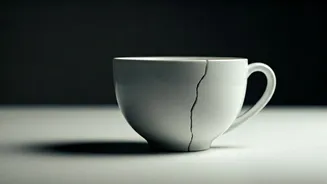
The 'ick' factor represents those subtle, often unexplained, aversions that can instantly extinguish attraction in the dating world. These aren't necessarily
dealbreakers based on core values or character, but rather small quirks – perhaps a peculiar laugh, a specific phrase, or an unusual habit – that can trigger an immediate sense of repulsion. This phenomenon has become increasingly prevalent, with individuals citing these micro-turn-offs as reasons for ending potential relationships before they can truly blossom. Experts note that the digital age, with its constant stream of options on dating apps and curated perfection on social media, has amplified our tendency to be hyper-critical and less forgiving of minor imperfections in others. This often leads to an elevated expectation of flawlessness that is rarely met in real-life interactions.
Roots of the Phenomenon
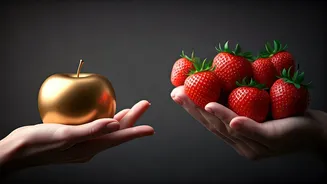
Several societal shifts contribute to the rise of the 'ick' factor in contemporary dating. The proliferation of dating applications has fostered an environment of hyper-selection, where an abundance of potential partners can lead to a more discerning and less tolerant approach to dating. We are often presented with so many choices that minor quirks can easily feel like disqualifiers, pushing us to seek an unattainable ideal. Furthermore, social media platforms often showcase highly curated and idealized versions of relationships, setting unrealistic expectations for what authentic connection looks like. This constant exposure to seemingly perfect romances can make it difficult to accept the inherent imperfections and individual eccentricities that are part of any genuine human bond. At times, an 'ick' can also stem from deeper psychological roots, where a minor annoyance might unconsciously remind someone of a past negative experience, triggering an immediate and visceral rejection.
Navigating the 'Ick'
While the 'ick' factor can be a source of frustration in the dating landscape, understanding its origins offers valuable insights. It serves as an invitation for self-reflection, prompting us to examine our own expectations, biases, and whether we are applying an overly critical lens. Distinguishing between genuine red flags and superficial dislikes is crucial. If an 'ick' points to disrespect, emotional immaturity, or conflicting values, it warrants attention and careful consideration. However, if it pertains to mere style, harmless habits, or peculiar quirks, it might be an opportunity to practice greater tolerance and understanding. Developing self-awareness allows us to assess if our reactions are rooted in personal insecurities or past experiences, rather than objective incompatibility. Ultimately, fostering healthy relationships involves balancing personal standards with an openness to overlook minor imperfections, recognizing that true connection is built on shared values and mutual acceptance.
Youth Perspectives on 'Icks'
Young daters, particularly Gen Z, offer a diverse range of perspectives on what constitutes an 'ick'. For some, egregious behaviors like speaking negatively about ex-partners are major turn-offs. Others find political unawareness or the cracking of jokes that disguise misogyny to be instantly unattractive. Examples shared include a guy speaking ill of his exes, a lack of political awareness, or jokes that belittle women. Shallow attitudes and selfishness are also frequently cited as highly undesirable traits. These 'icks' range from the seemingly trivial, such as the way someone runs or pronounces a word, to more serious concerns like insincere promises or an eagerness to rush intimacy. These examples highlight how individual experiences and values shape what triggers an 'ick', demonstrating the subjective nature of these minor aversions.
The Impact of 'Ick' Culture
The prevailing 'ick' culture can be seen as a symptom of a broader trend in modern dating, where minor imperfections are often overemphasized, a phenomenon amplified by social media narratives. This environment normalizes the instant dismissal of potential partners based on superficial traits. As Kritty Gahatraj notes, this is partly due to choice overload facilitated by dating apps and the societal pressure to curate 'perfect' relationships. This heightened self-awareness, paradoxically, can make individuals more critical, transforming small quirks into perceived deal-breakers rather than unique individual characteristics. While humor around 'icks' can be lighthearted, a constant search for flaws can erode patience, empathy, and the genuine connection essential for lasting relationships. The challenge lies in finding a balance between maintaining healthy standards and embracing the imperfections that make us human.
Beyond Superficial Dislikes
Relationship coach Sumir Nagar defines 'ick culture' as the normalization of micro-turn-offs as valid reasons to disengage from someone. This trend has flourished on platforms like TikTok and Instagram, where 'icks' are shared and discussed. Nagar emphasizes that these aren't always about simple quirks; deeper dynamics are often at play. The abundance of options on dating apps trains individuals to have lower tolerance, with minor imperfections feeling like disqualifiers. He also points to a fear of vulnerability, sometimes disguised as high standards, where labeling something an 'ick' becomes an easier way to reject someone than admitting uncertainty or fear of emotional investment. This can lead to a cycle of superficial evaluations, where individuals miss out on potentially meaningful connections due to an excessive focus on minor issues.
The Problem with Perfectionism
The current dating scene often involves individuals evaluating potential partners in real-time, treating every behavior as content, and blurring the lines between genuine compatibility and mere aesthetic preference. This can lead to confusing surface-level irritations, like how someone eats, with fundamental incompatibilities related to values, respect, or emotional maturity. According to Nagar, allowing 'icks' to dictate decisions doesn't result in better partners, but rather in shorter attention spans, reduced emotional resilience, and a perpetual search for an unattainable ideal. The irony is that the more we strive for perfection in others, the more we may find ourselves repulsed by common human behaviors. Therefore, it's vital to discern whether an 'ick' signals a deeper issue or is simply a minor characteristic that doesn't detract from a person's overall worth.
Moving Past the 'Ick'
Mental health expert Tanvi Singh suggests that overcoming an 'ick' is indeed possible. The crucial first step is to pause and avoid immediate rejection. Behaviors like disrespect, manipulation, or inconsistency are patterns, not mere 'icks.' However, human quirks like nail-biting, awkward communication, or not fitting a precise notion of 'cool' are simply part of being human and can be understood. Attraction doesn't always arrive fully formed; it can grow as trust and understanding develop. Consistently exiting at the first sign of discomfort prevents this growth. It's also important to consider our own 'icks' – how our own behaviors might trigger a negative reaction in others. Instead of avoiding every possible 'ick,' the focus should shift to whether one can invest enough time to understand what truly matters in a connection, potentially discovering a valuable person beyond initial, superficial turn-offs.