



Litti Chokha's Ascent
Originating from the rural landscapes of Bihar and eastern Uttar Pradesh, litti chokha was a testament to resourcefulness and affordability. Wheat dough
balls, generously stuffed with spiced sattu (roasted gram flour), were traditionally cooked over open fires. This hearty preparation, often served with mashed vegetables, provided essential sustenance for farmers and travellers, utilizing readily available local ingredients. Once relegated to the status of rustic village fare, litti chokha has experienced a significant revival, propelled by burgeoning food tourism and a renewed sense of regional pride. Modern restaurants and urban eateries now present sophisticated renditions, enhanced with generous drizzles of ghee and artfully arranged accompaniments, effectively elevating this humble survival meal into a cherished regional delicacy that appeals to a more discerning palate.
Dal Makhani's Rich Transformation
Dal makhani, a dish now synonymous with luxurious indulgence, began its life as a straightforward, satisfying meal in Punjabi farmhouses. Crafted from whole black lentils and kidney beans, it was meticulously slow-cooked overnight over wood fires, ensuring that agricultural labourers had a protein-rich and filling meal ready after their arduous days. This extended cooking time was purely functional, designed to tenderize the legumes efficiently while families rested, imbuing the dish with a subtle smokiness from the traditional 'chulha' (earthen stove). The abundance of butter and cream characteristic of today's versions was a later addition, introduced by Delhi's restaurants aiming to cater to the palates of urban diners. Currently, slow-simmered dal makhani stands as a signature offering in high-end North Indian establishments, its long cooking process and smoky essence marketed as key attributes, transforming a simple staple into a gourmet comfort food.
Khichdi: From Simplicity to Superfood
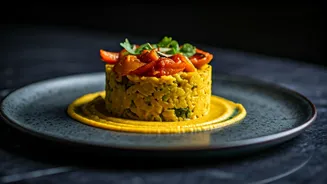
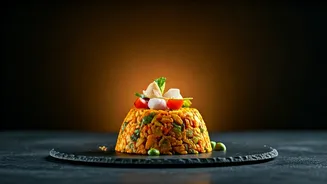
For countless generations, khichdi has been the embodiment of simplicity, recovery, and frugality. This uncomplicated mixture of rice and lentils, requiring minimal spices and being exceptionally easy to digest, was a common sight in households with limited resources and during periods of agricultural scarcity. Its true comfort lay in its remarkable versatility, with regional variations adapting its preparation based on locally available grains, lentils, and climatic conditions. Consistently prepared for the young, the elderly, and the ailing, it signified care and nourishment rather than culinary indulgence. Ironically, the contemporary wellness movement has propelled khichdi into the realm of celebrated 'superfoods.' Upscale restaurants now feature gourmet interpretations adorned with exotic vegetables, truffle oil, or artisanal ghee, celebrating what was once perceived as plain or even monotonous for its nutritional balance and mindful eating qualities.
Ragi Mudde's Nutritional Comeback
In regions like Karnataka and other parts of South India, ragi mudde (finger millet balls) was traditionally a dietary cornerstone for agricultural laborers, owing to the affordability, hardiness, and sustaining power of finger millet. Rolled into dense spheres and typically consumed with sambar or spicy gravies, these provided sustained energy crucial for physically demanding work. Beyond mere sustenance, ragi mudde reflected profound agricultural wisdom, thriving in arid climates where other crops often faltered. Its preparation was an art form, often passed down through families, intertwining a simple meal with cultural practices deeply connected to the land, labor, and community. However, modernization and evolving food preferences led to such traditional meals being marginalized, often viewed as rural or antiquated. As polished grains and processed foods gained favor, younger generations drifted away from millet-based diets, inadvertently disconnecting from nutritionally sound indigenous eating practices rooted in sustainability. This shift mirrored changing aspirations, where convenient foods became symbols of modernity. Traditional millet meals, once daily staples, were supplanted by faster, refined alternatives, even as older generations continued their preparation, preserving culinary knowledge that would later resurface. The growing appreciation for millets and sustainable grains has led to ragi's rediscovery as a potent nutritional source, rich in calcium and fiber. Today, urban eateries and health-conscious cafes champion ragi dishes as premium, eco-friendly choices, repositioning a formerly humble staple as contemporary wellness cuisine.
Sarson Saag & Makki Roti's Elevated Status
This iconic Punjabi winter pairing originated as a seasonal, rural sustenance, derived from abundant local mustard greens and maize flour. Farmers favoured these ingredients for their cost-effectiveness and suitability to the cold weather. Prepared slowly over wood fires, the sarson ka saag was often made in large quantities to feed families after extensive fieldwork, offering warmth, vital nutrients, and sustained energy throughout harsh winters, becoming intrinsically linked to agricultural cycles and communal gatherings. Currently, sarson ka saag is revered as heritage cuisine. Restaurants highlight the meticulous slow-cooking process, generous dollops of white butter, and traditional preparation methods, often commanding prices significantly above its humble origins. The dish's authentic, rustic character has become its most potent luxury appeal, attracting connoisseurs seeking traditional flavors.
Pakhala Bhat: Cooling Comfort Reimagined
In Odisha, pakhala bhat, a simple preparation of fermented rice soaked in water and seasoned with salt, chilies, or other basic accompaniments, served as a cooling summer meal for working-class families. This dish was ingenious in its ability to utilize leftover rice, minimizing food waste while simultaneously providing a refreshing respite from intense heat. Over time, this modest preparation became deeply integrated with seasonal cycles and agricultural life, offering hydration and essential nourishment during long, physically demanding days. Its inherent simplicity reflected a profound resourcefulness, where comfort, sustainability, and practicality converged within a single bowl, passed down through generations. Modern nutritional science now emphasizes the benefits of fermented foods for gut health, and chefs have embraced pakhala as a delightful source of probiotics. Refined interpretations, featuring thoughtfully curated side dishes and rich regional narratives, have successfully propelled this once overlooked meal into the culinary spotlight, garnering it well-deserved recognition.
Misal Pav's Gourmet Turn
Misal pav emerged as an economical street food in Maharashtra, designed to be both filling and budget-friendly. Its core consisted of sprouted lentils simmered in a fiery gravy, generously topped with crunchy 'farsan' (savory snack mix), offering a potent combination of flavor and nutrition at a low cost, making it a favorite among laborers and students alike. Vendors typically prepared substantial batches in the early mornings, enabling commuters and workers to quickly grab an energizing meal before commencing their day. The dish's bold, spicy character, complemented by the soft texture of pav bread, rendered it both comforting and invigorating, perfectly aligning with Maharashtra's dynamic urban food culture. Over the years, subtle regional variations flourished across cities like Pune, Nashik, and Kolhapur, each introducing its distinct balance of heat, texture, and tanginess. Families developed strong allegiances to specific styles, engaging in spirited debates over spice levels and toppings, transforming a simple breakfast into a deeply personal culinary identity. Today, specialized eateries actively compete, showcasing diverse regional misal styles, varying spice intensities, and premium ingredients. Some versions are presented with theatrical flair, elevating what was once everyday sustenance into an extraordinary gastronomic adventure, celebrating its complex flavors and textures.