
Market's Service-Driven Shift
The global ground segment market is currently estimated to be worth $106 billion. This substantial market is experiencing a notable transition towards
service-oriented models. This shift is propelled by the escalating requirements of satellite operators, as well as the increasing sophistication of space-based operations. The move towards service-driven approaches has been facilitated by technological advancements, including improved data analytics, automation, and cloud computing. These technologies enable more efficient and flexible ground segment operations. This transformation allows companies to reduce upfront costs, improve operational agility, and focus on their core competencies, such as data interpretation and service delivery. The adoption of service-based models is set to change the competitive landscape, creating new opportunities for specialized service providers. The ultimate goal is to enhance the overall effectiveness and cost-efficiency of satellite operations, making space-based services more accessible and sustainable.
2025: The Turning Point
The year 2025 has been highlighted as a pivotal moment for satellite operators. Various analysts suggest that this period will bring about significant changes to the strategies and technologies within the ground segment market. This forecast is based on the expectation that several key technological advancements will come to maturity, alongside the ongoing expansion of satellite constellations and the demand for enhanced services. The widespread adoption of these advanced technologies in 2025 will likely lead to more integrated and automated ground segment solutions. This will improve data processing capabilities and the speed of information delivery. Furthermore, the industry is expected to see a greater emphasis on providing end-to-end services. This shift will allow satellite operators to focus on their core business of data utilization and service provision rather than managing complex ground infrastructure. As 2025 approaches, many companies will be developing the technologies and strategies required to capitalize on the upcoming changes, positioning themselves to lead the market.
Collaborations in Space
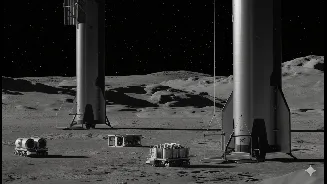
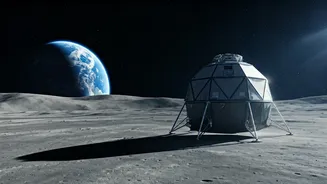
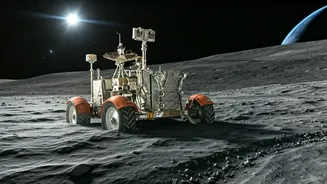
Strategic collaborations between key players are becoming a crucial element in driving the evolution of the ground segment market. An example of such collaboration is the partnership between Intuitive Machines and Telespazio, who are working together on lunar satellite networks. These networks, tailored for lunar missions, will enhance the support for lunar exploration activities and scientific objectives. Such alliances combine different areas of expertise, such as satellite operations, infrastructure management, and data handling. They leverage the specific strengths of each partner to advance innovative solutions. Collaborative efforts also facilitate risk-sharing and reduce the financial burden associated with development and deployment. As a result, companies can accelerate the deployment of cutting-edge technologies and services, like the creation of dedicated ground stations, optimized communication protocols, and sophisticated data analysis platforms. These networks will support a variety of missions, from scientific research to commercial ventures.
Validating New Technology
The rigorous testing and validation of new technologies are essential steps in the ground segment market. A key example is Enduralock's validation of its OneLink™ prototype in a zero-g simulation. This zero-gravity simulation allowed Enduralock to assess the performance of its OneLink™ prototype under conditions similar to those in space. The validation process involves subjecting prototypes to harsh environments to ensure that they are capable of operating reliably. The testing helps to identify any design flaws or performance limitations. The simulation results provide critical data to refine designs, improve operational procedures, and prepare for real-world deployments. This validates the technology's effectiveness, giving confidence to potential customers and investors. The successful validation of such technology advances the industry by creating more robust, efficient, and reliable systems for satellite operations.