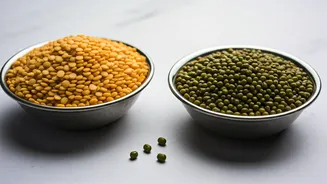







Dal's Nutritional Edge
In the heart of Indian cuisine, dals are more than just comfort food; they are vital sources of protein and fiber, increasingly recognized for their role
in fitness. Moong dal and arhar (toor) dal stand out as popular choices, often debated for their weight management potential. While both are nutrient-rich and versatile, they present minor variations in calorie density, protein composition, how easily they are digested, and their effect on feeling full. For individuals focused on shedding pounds, these distinctions can significantly influence dietary strategies, including portion control and the duration of satiety. Some individuals favor moong dal for its perceived lightness and rapid digestion, while others prefer arhar dal for its substantial, familiar presence in daily meals. It's crucial to remember that weight loss is seldom dependent on a single food item; preparation methods, serving sizes, and accompanying dishes all play a critical role in the overall calorie intake and nutritional impact. Grasping how each dal fits into a balanced, calorie-conscious eating plan allows for informed decisions without sacrificing beloved foods.
Nutritional Showdown
A closer look at the nutritional profiles reveals how moong dal and arhar dal stack up. According to consultant dietician Kanikka Malhotra, both are excellent, low-fat pulses conducive to weight loss. Per 100 grams of cooked dal, moong dal typically provides about 120-140 calories, 7-8 grams of protein, and 4-5 grams of fiber. Arhar dal, on the other hand, offers slightly more calories, around 130-150 kcal, with a comparable protein content of 7-8 grams, but boasts a marginally higher fiber count of 5-6 grams. Malhotra highlights that moong dal has a slight advantage due to its lower calorie count and easier digestibility, attributed to less complex fiber structures, which can enhance feelings of fullness relative to the calories consumed. While neither dal is definitively 'superior,' moong dal's lighter composition can be more supportive of a modest calorie deficit, a key component of weight loss. The expert emphasizes that these differences, though subtle, can contribute to more effective weight management strategies when incorporated thoughtfully into the diet.
Satiety and Digestion
The fiber and protein content in both moong and arhar dal play a significant role in satiety, blood sugar regulation, and overall weight management. Malhotra explains that the fiber and quality protein in moong dal contribute to a slower digestive process, which helps stabilize blood sugar levels and prevent energy slumps followed by intense hunger. Arhar dal, with its higher fiber content, also aids in this regard, though some individuals might find it heavier or experience bloating due to its composition. Furthermore, arhar dal may have a slightly higher glycemic index (GI) compared to moong dal. Moong dal generally digests more smoothly, allowing for consistent eating patterns without digestive discomfort. Both dals are beneficial for muscle development, but moong dal is noted for providing quick energy, making it a suitable option for active individuals or those with demanding daily schedules. The ease of digestion offered by moong dal can be particularly advantageous for those seeking a lighter meal that still provides essential nutrients.
Smart Preparation Tips
For individuals aiming for weight loss, strategic portioning and preparation of moong and arhar dal are key. Kanikka Malhotra recommends a daily intake of approximately 30-40 grams of dry dal. This translates to roughly half to three-quarters of a cup when cooked, equating to about 100-120 calories. To maximize digestibility and nutrient absorption, soaking the dal before cooking is advisable. Moong dal typically requires 20-30 minutes of pressure cooking, while arhar dal needs 40-50 minutes. Preparing the dal with minimal oil—a teaspoon is sufficient—along with turmeric (haldi) and cumin seeds (jeera) enhances flavor without adding excessive calories. Complementing the dal with fiber-rich green vegetables such as spinach (palak) or bottle gourd (lauki), a fresh salad, or a single whole wheat roti can further boost fiber intake without a significant calorie increase. It's recommended to avoid heavy 'tadkas' (tempering) that often involve substantial amounts of oil or ghee. Moong dal, in particular, is suggested as an ideal choice for lighter evening meals to support weight management goals effectively.