



The VLEO Challenge
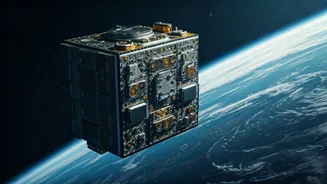
Satellites in Very Low Earth Orbit (VLEO) face a tough environment. Located just a few hundred kilometers above Earth, they experience significant atmospheric
drag. This constant friction causes satellites to lose altitude, requiring frequent adjustments and eventually leading to their premature demise. Furthermore, the intense radiation in this region poses a significant threat, degrading satellite components over time. These harsh conditions make VLEO a demanding environment to operate in, highlighting the need for technological advancements to extend satellite lifespans and enhance their operational capabilities.
AO-Resistant Materials Unveiled
To address the challenges in VLEO, researchers have developed materials that are highly resistant to atomic oxygen (AO). Atomic oxygen, a major component of the upper atmosphere, aggressively erodes satellite surfaces, leading to performance degradation and structural failure. These new materials are designed to withstand this harsh environment, offering a protective barrier against erosion. Examples include specialized coatings and composite materials that have been engineered to minimize the impact of AO. This allows satellites to maintain their structural integrity and operational effectiveness for a longer duration, making VLEO a more sustainable and viable environment for space missions.
Benefits of the Innovation
The use of AO-resistant materials yields significant benefits for VLEO satellites. First and foremost, they greatly extend a satellite’s operational lifespan. By reducing the rate of degradation caused by atomic oxygen, these materials allow satellites to function longer before they need to be replaced or repaired. This longevity translates into cost savings. Furthermore, prolonged satellite life enhances the return on investment for space missions. The ability to keep satellites in orbit for extended periods means more data collection, improved communication capabilities, and prolonged scientific research. This translates to increased efficiencies and decreased expenditures for governments, private companies, and research institutions operating in VLEO.
Impacts and Implications
The development and deployment of AO-resistant materials have far-reaching implications. It is making VLEO a more attractive environment for a range of applications, including earth observation, communications, and scientific research. Longer satellite lifespans reduce the frequency of launches, thus lowering the cost and environmental impact of space operations. It allows for new missions. The adoption of these materials will drive further innovation in space technology. This will involve the development of improved coatings, more robust materials, and advanced manufacturing techniques. Ultimately, the advancement of AO-resistant materials will lead to a more sustainable and accessible space environment, benefiting a diverse array of stakeholders.
Future Developments
Looking ahead, the research and development in AO-resistant materials are expected to continue at an accelerated pace. Scientists are working on materials that offer even greater protection against the harsh conditions of space. Future advancements may include self-healing coatings, materials with improved resistance to extreme temperatures, and those able to withstand high levels of radiation. These innovations will further enhance the durability and longevity of satellites in VLEO. Ongoing developments will continue to revolutionize space operations, paving the way for more ambitious and sustainable space exploration and utilization.