






Greeting Wars
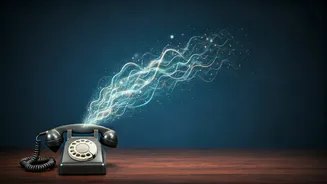
Contrary to popular belief, Alexander Graham Bell's preferred way to answer the telephone wasn't "Hello." He envisioned a more formal greeting: "Ahoy-hoy."
However, the simple "Hello," already gaining traction in the years before the telephone's invention, eventually triumphed. Its popularity was significantly boosted by Thomas Edison, a prominent early adopter who championed its use. This linguistic battle between greetings highlights how quickly new technologies adopt and adapt existing social norms, often with unexpected outcomes.
Who Invented It?
While Alexander Graham Bell is widely credited with inventing the telephone, the reality is more complex. Several inventors were simultaneously working on similar devices. The U.S. Congress officially recognized Antonio Meucci in 2002 for his significant contributions to the telephone's development. Bell ultimately secured the patent, a feat that was nearly missed. Elisha Gray filed a patent for a comparable device on the very same day as Bell. Bell's attorney's prompt filing gave him the crucial advantage in securing legal recognition for the invention, even as other pioneers were close behind.
Mobile Penetration
The telephone has undergone a remarkable transformation since its inception. In a testament to this evolution, a recent study indicates that a staggering 98 percent of Americans now possess a mobile phone, with an impressive 91 percent owning a smartphone. This represents a monumental shift from 2011, when Pew Research first surveyed the nation and found that only 35 percent owned a smartphone. This dramatic increase underscores the profound integration of mobile technology into daily American life.
A Day for Phones
For those who appreciate the impact of the telephone, there's a dedicated national holiday. Celebrated annually on April 25th, this day honors the invention and its legacy. The holiday's origins trace back to May 1967, when it was established to commemorate the installation of the 100 millionth telephone line in the United States. To mark this significant milestone, governors and dignitaries participated in what was then the largest conference call ever held, receiving commemorative gold telephones as part of the festivities.
The Fading Payphone
In the past, individuals relied heavily on payphones for communication when away from home, often needing spare change to make a call or asking the recipient to accept the charges. However, with the widespread adoption of cell phones and smartphones, payphones have significantly diminished. It's estimated that only around 100,000 payphones remain in use across the country. For those in urgent need of a payphone, online directories still exist to help locate these increasingly rare public communication points.
First Text Message
Today, sending text messages is often more common than making voice calls for many telephone users. The very first SMS text message was sent in 1992, carrying a festive holiday greeting. An engineer at Vodafone transmitted "merry Christmas" from his computer to a director's cell phone. However, the technology at the time was not fully developed, and the recipient was unable to reply because cell phones lacked this capability. This marked the nascent beginning of a communication method that would eventually dominate personal interaction.