






A New Urban Vision
Agra's real estate sector is poised for a significant evolution with the impending launch of the Greater Agra Project. Chief Minister Yogi Adityanath is scheduled
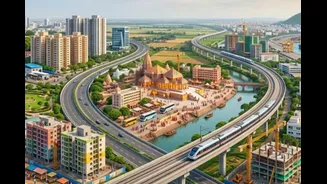
to perform the foundational ceremonies for this expansive urban development on April 7, 2026. This colossal undertaking involves the creation of ten meticulously planned townships, spanning a total area of 449 hectares. The project's projected cost stands at a substantial Rs 5,142 crore, with the overarching goal of establishing a contemporary satellite city capable of accommodating Agra's expanding population. Critically, this development is designed to integrate seamlessly with the city's rich historical fabric, offering a forward-thinking solution to existing congestion issues. The project intends to shift the urban focus towards areas like the Inner Ring Road and the Lucknow Expressway, paving the way for a more organized and accessible cityscape that respects its heritage.
Rivers as Inspiration
The Agra Development Authority (ADA) has ingeniously conceptualized these ten new residential areas, drawing inspiration from India's most revered rivers. Each township is christened after an iconic waterway, such as Narmadapuram, Gangapuram, Yamunapuram, and Sindhupuram, embedding a sense of cultural connection into their identity. These townships are engineered to function as self-sufficient communities, each equipped with its own dedicated green spaces, local markets for daily needs, and essential utility centers. Among them, Gomtipuram is slated to be the largest, encompassing approximately 49 hectares and designed to be a major community hub. In contrast, Sindhupuram offers a more exclusive, though smaller, residential enclave covering about 26 hectares. Their strategic placement near the Inner Ring Road significantly enhances connectivity, simplifying commutes for residents traveling to major cities like Delhi and Lucknow and thereby improving the accessibility of real estate options in Agra.
Infrastructure & Investment
The financial backing for the Greater Agra initiative is robust, stemming from diverse sources. The state government has already committed an initial grant of Rs 375 crore to the ADA, providing a strong foundation for the project. The remaining substantial investment of Rs 5,142 crore will be sourced through a combination of internal funds generated by the ADA and revenue from land sales within the project. This comprehensive financial strategy is designed to ensure the project's successful execution. The development includes wide main roads measuring 60 meters and internal roads of 24 meters, a significant improvement for a city often characterized by narrow streets. Located in Raipur and Rahnkalan, these townships are strategically positioned to benefit from the city's rapidly developing eastern corridor, an area poised to become a key hub for logistics and residential growth due to its proximity to the Agra-Lucknow Expressway.
Green Innovation
A particularly innovative aspect of the Greater Agra Township project is the ADA's forward-thinking approach to utilizing the underutilized land beneath high-tension power lines. Instead of these spaces remaining vacant and becoming prone to accumulating waste, they will be transformed into dense urban forests using the scientifically proven Miyawaki technique. This initiative aims to create a natural green buffer zone surrounding the townships, serving as a substantial carbon sink. Chief Minister Yogi Adityanath has strongly advocated for this 'Green-City' model, emphasizing the importance of maintaining ecological balance as the city expands. This commitment to environmental sustainability ensures that Agra's growth will not come at the expense of its natural environment, setting a new standard for urban development in the region.
Future Prospects
The slated April 2026 launch of the Greater Agra project signifies a pivotal moment, heralding a new era of structured urban expansion for the city. The Uttar Pradesh government, through this ambitious undertaking, is providing a high-quality, well-planned alternative to the haphazard urban sprawl that has characterized development in many areas. This project represents a significant step towards offering residents a better quality of life with improved infrastructure and amenities. Whether individuals are looking to purchase their first home or seasoned investors seeking new opportunities, the Greater Agra project presents a compelling proposition. It uniquely blends the assurance of government backing with the advantages of modern infrastructure, laying out a clear vision for Agra's development and character over the next fifty years.