


Peak Illumination & Viewing Tips
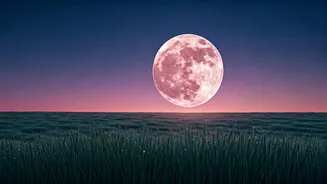
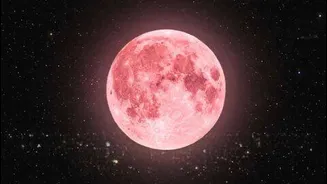
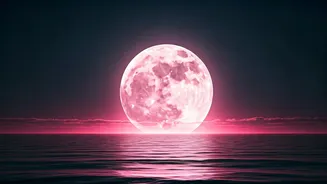
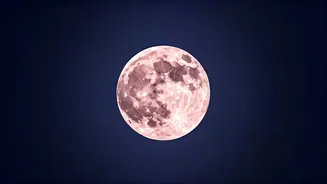
Prepare for a celestial display as April’s full moon, historically termed the 'Pink Moon,' approaches its zenith. While its peak illumination is scheduled
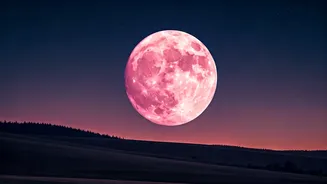
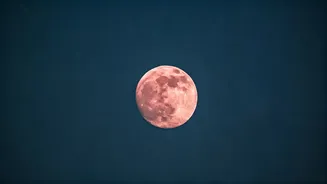
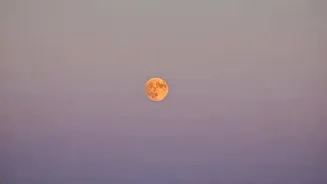
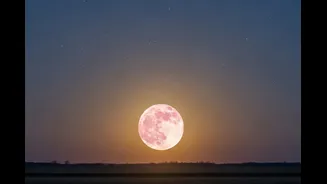
for 3:12 AM on Thursday, April 2nd, the most breathtaking visuals are anticipated on the evening of Wednesday, April 1st. As the moon ascends above the horizon, it presents an exceptional opportunity for skygazers. Despite the evocative name, the moon is unlikely to exhibit a pink hue. Instead, atmospheric conditions will likely paint it in warm shades of orange and gold, creating a truly memorable spectacle for anyone looking skyward.
The Pink Moon's True Origin
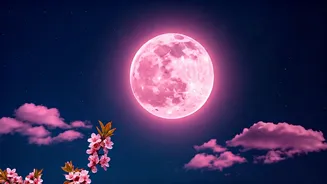
The moniker 'Pink Moon' doesn't stem from the moon's actual color, but rather from ancient traditions. Historically, various Indigenous American tribes meticulously tracked the passage of time and seasons by observing the lunar cycle. They assigned names to each full moon based on natural phenomena occurring during that period. This particular full moon was named in honor of the wild ground phlox, a vibrant pink wildflower that carpets the landscape in early spring. Therefore, the name is a poetic nod to the blooming flora of the season, rather than a literal description of the moon's appearance.
The Science of Color
The captivating orange and golden hues often observed during a low-hanging full moon, including April's 'Pink Moon,' are a result of a fascinating interaction with Earth's atmosphere. When the moon is near the horizon, the light it reflects must travel through a significantly thicker layer of our atmosphere to reach our eyes. This extended journey causes shorter wavelengths of light, such as blues and violets, to scatter in various directions due to atmospheric particles. The longer wavelengths, encompassing reds, oranges, and yellows, are less affected and are able to penetrate this atmospheric barrier. Consequently, the moon appears to glow with a warm, fiery radiance, a phenomenon akin to the beautiful colors seen during sunsets.
A Celestial Companion
Adding to the allure of this lunar event, April's full moon is accompanied by a striking celestial neighbor. Positioned in close proximity to the moon will be Spica, one of the brightest stars visible in the night sky. Spica is not a solitary star but a binary system, adding to its brilliance. Its location within the Virgo constellation makes its presence particularly noteworthy. The conjunction of the radiant full moon and the luminous Spica creates a dynamic and visually appealing tableau in the night sky, offering an enhanced experience for amateur astronomers and casual observers alike.
Holiday Calendar Connection
Beyond its astronomical and aesthetic appeal, the timing of the 'Pink Moon' holds significant cultural and religious importance, directly influencing the dates of major holidays. The precise moment of this full moon serves as a critical marker for determining when Easter and Passover are celebrated. Specifically, Easter is observed on the first Sunday following the first full moon that occurs after the vernal equinox. Given that this year's astronomical spring equinox took place on March 20th, the April full moon dictates the timing of the upcoming Easter festivities, solidifying its role as a pivotal event in the calendar.
Weather Watch
As with any outdoor celestial event, the visibility of the 'Pink Moon' is ultimately dependent on meteorological conditions. For observers in the UK, the forecast presents a mixed outlook. In England and Wales, cloud cover and potential rainfall on Wednesday evening may obscure the moon, posing a challenge for viewing. However, conditions are more promising in Scotland and Northern Ireland, where colder air masses suggest a greater likelihood of clear skies and unobstructed views. Regardless of the specific weather, taking a moment to step outside on Wednesday night to appreciate the spring sky is encouraged.