



The Humble Potato's Journey
The potato, a ubiquitous presence in countless Indian meals from fluffy parathas to spicy samosas and vibrant chaats, is often taken for granted as an indigenous
staple. However, this versatile tuber's story begins in the lofty Andes Mountains of South America, specifically in the regions now known as Peru and Bolivia. It was cultivated by the ancient Inca civilization centuries before it made its way to Europe and subsequently to the Indian subcontinent. Its success in India lies in its incredible adaptability, its affordability, and its ability to absorb and enhance the complex array of local spices and masalas, making it a true culinary chameleon.
Tomatoes: A Global Staple
It's nearly impossible to envision modern Indian cuisine without the vibrant tang and color of tomatoes. Yet, this essential ingredient also embarked on a long voyage to reach Indian kitchens. Originating in the Andes, tomatoes were first domesticated in ancient Mexico before Spanish explorers introduced them to Europe in the 16th century. Their journey continued, eventually integrating into Indian cooking where they became a cornerstone for balancing flavors in gravies, chutneys, and sauces. Beyond their culinary significance, tomatoes are rich in lycopene, an antioxidant that imparts their signature red hue and is associated with benefits for heart health and skin protection against environmental damage.
Chilli Peppers: A Fiery Import
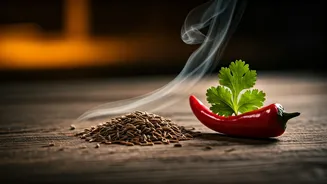
The association of Indian food with a delightful level of heat is undeniable, but the fiery chilli pepper itself is not native to India. These potent pods trace their origins back to the Americas, with scientific evidence pointing to Mexico as a key center for the domestication of the Capsicum annuum lineage, while other varieties were cultivated across Central and South America. After being introduced to Europe in the late 15th century, chillies rapidly disseminated across continents, including Asia. While India didn't invent the chilli, its culinary traditions embraced and perfected its use, transforming it into an intrinsic element of the nation's spice palate, making it feel as if it were an ancient Indian discovery.
Cauliflower's Indian Makeover
Cauliflower dons its Indian guise with remarkable conviction, appearing in popular dishes like aloo gobi, rich kormas, and lively street food preparations. Its widespread acceptance makes it easy to overlook its foreign beginnings. This cruciferous vegetable actually originated in Western Asia, where it was known to civilizations such as the ancient Persians, Greeks, and Romans. Through centuries of travel and adaptation, cauliflower found its way to India, where it was integrated into the local gastronomy, becoming a familiar sight in homes and eateries. Its current Indian identity is a testament to its successful assimilation into the subcontinent's diverse food culture.
The Samosa's Transnational Past
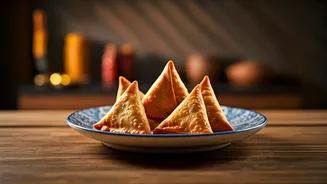
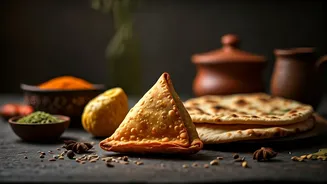
The samosa, an iconic and beloved Indian snack, boasts a history that stretches far beyond India's borders. Its ancestral roots can be traced back to medieval pastries found in the Middle East and Central Asia, where similar filled baked goods were known by names like 'sanbusak.' These precursors likely journeyed to the Indian subcontinent via royal culinary exchanges and trade routes. In India, the recipe was brilliantly reimagined, evolving into the crisp, triangular, spice-filled delight that is now synonymous with Indian tea time and street food culture. India didn't just adopt the samosa; it innovated and perfected it.
Naan: A Persian Connection
The soft, often buttery flatbread known as naan, a ubiquitous feature in Indian restaurants both domestically and internationally, carries a name of Persian origin. Etymological sources suggest 'naan' derives from Persian terms related to bread, such as 'nân-e sangak.' Historical records indicate its presence in India dating back to at least the 14th century, as noted by poet Amir Khosrow. It's believed that naan traveled along the ancient cultural and trade pathways connecting Persia, Central Asia, and the Indian subcontinent. As culinary practices were shared, wheat breads baked in ovens gradually adapted to local tastes, particularly in North India, gaining prominence within Mughal culinary traditions before becoming widespread.
Jalebi: A Sweet Migration
Jalebi, with its distinctive spiral shape and syrupy sweetness, evokes images of Indian festivals, joyous celebrations, and bustling sweet shops. However, its culinary lineage points westward. Historical evidence suggests the existence of similar confections in Arabic and Persian cookbooks, referred to as 'zalabiya' or 'zolbiya,' which later spread through the Middle East before reaching India. The Indian adaptation of this sweet has evolved over time, becoming notably brighter, crispier, and more visually dramatic, culminating in the iconic orange coil that is now a symbol of Indian confectionery. While the concept of jalebi traveled, India undoubtedly gave it its most cherished and recognizable form.