




Ants: Underground Cities
Ants are truly remarkable architects, designing complex underground networks of tunnels and chambers that serve as intricate colonies. Some species go
a step further, constructing above-ground structures from collected twigs, sand, or gravel. A prime example of their ingenuity is the weaver ant, which artfully pulls leaves together, using silk painstakingly produced by their larvae to securely bind these structures. These meticulously crafted nests are not merely shelters; they are vital hubs that protect the entire ant community and facilitate the organization of their daily activities, from foraging to brood care.
Termites: Climate-Controlled Fortresses
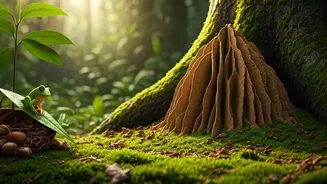
Termite nests, or mounds, stand out as some of the most sophisticated constructions in the animal kingdom. These subterranean or above-ground edifices are designed to maintain a consistent warm, damp, and dark internal environment, crucial for the survival of the colony by preventing desiccation. Many of these complex structures incorporate sophisticated ventilation systems that meticulously regulate airflow, temperature, and humidity. In certain termite species, the nest can extend into extensive underground chambers and prominent mound-like formations that function as remarkably efficient, naturally regulated climate-controlled habitats for the colony.
Fish: Aquatic Nurseries
Surprisingly, the art of nest-building extends to the aquatic world, with the three-spined stickleback serving as a notable example. The male of this species diligently crafts a nest by gathering and arranging fragments of aquatic vegetation. He then binds these materials together using a unique adhesive substance secreted from his own kidneys. This carefully constructed nest serves a dual purpose: attracting potential mates for reproduction and providing a secure location to safeguard the developing eggs from environmental hazards and predators, highlighting the strong link between nesting behavior and parental investment in fish.
Frogs: Frothy Sanctuaries
Certain species of frogs exhibit an extraordinary nesting behavior, most notably through the creation of foam nests. These amphibians produce a frothy mass, into which their eggs are carefully deposited. This unique frothy structure acts as a protective cocoon, shielding the delicate eggs from a variety of threats, including predation, parasitic infections, extreme temperatures, and dehydration. The remarkable stability of this foam, especially in humid tropical climates, allows it to persist for extended periods, providing a consistently moist and secure micro-environment essential for the eggs' survival until hatching.
Squirrels: Cozy Dreys
The arboreal homes created by squirrels are known as dreys, and they are masterpieces of natural engineering. These nests are typically constructed from a interwoven network of twigs, forming a roughly spherical shape. To enhance comfort and insulation, squirrels line their dreys with soft materials such as mosses, dried grasses, fallen leaves, and fragments of tree bark. These dreys are invariably situated at elevated positions in trees, usually close to the main trunk, a strategic placement that offers significant protection against ground-dwelling predators and environmental exposure.