



Planetary Parade
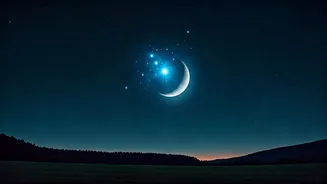
On the evening of February 25, 2026, a captivating planetary lineup will adorn the night sky, offering a fantastic opportunity for both seasoned astronomers
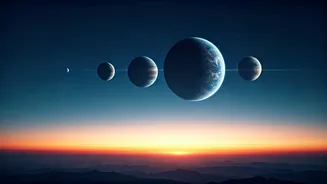
and casual observers. While the exact configurations can shift, typically Jupiter and Saturn remain prominent figures, often visible as bright, steady points of light. Jupiter, known for its exceptional brilliance, may be seen with the naked eye, and with a small telescope, observers might even glimpse its four largest moons – Io, Europa, Ganymede, and Callisto – a phenomenon first observed by Galileo. Saturn, renowned for its majestic rings, might also be a noticeable presence. Though the rings themselves require telescopic aid for clear observation, Saturn's distinctive yellowish hue often sets it apart. Depending on its orbital position, Mars, the 'Red Planet,' could also be a notable sight, its characteristic ruddy color distinguishing it from the stars. Venus, if visible, would be an exceptionally bright object, usually appearing in the early evening or pre-dawn twilight. The exact positioning and visibility of these celestial wanderers will depend on your specific geographical location and the time of night you choose to observe. Consulting a local astronomical almanac or sky-charting app will provide precise details for your viewing spot, ensuring you don't miss these planetary guests.
Starry Constellations
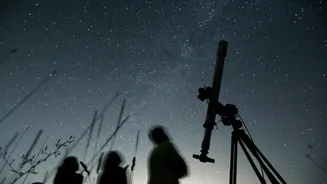
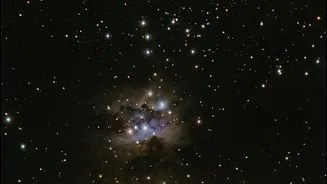
As darkness fully descends on February 25, 2026, the familiar patterns of constellations will emerge, offering a celestial map of the night. Orion, the Hunter, is a particularly impressive sight during this time of year for many Northern Hemisphere observers. Its distinct hourglass shape and the bright stars Betelgeuse (a reddish supergiant) and Rigel (a brilliant blue-white supergiant) make it unmistakable. The three stars forming Orion's Belt – Alnitak, Alnilam, and Mintaka – are a classic marker, often used to locate other celestial objects. Nearby, Taurus the Bull can be spotted, with its bright star Aldebaran forming the bull's fiery eye. The Pleiades star cluster, often called the 'Seven Sisters,' is also a dazzling spectacle within Taurus, appearing as a tiny, misty ball of light to the naked eye, and resolving into a breathtaking collection of stars with binoculars or a small telescope. For those in the Southern Hemisphere, constellations like the Southern Cross (Crux) will be rising or high in the sky, a crucial navigational aid for centuries. The fainter constellations also play their part, weaving a complex tapestry across the sky. Identifying these patterns can be a rewarding experience, transforming a simple stargazing session into an engaging journey through mythology and ancient astronomy, connecting us to countless generations who have looked up at the same cosmic display.
Moon's Gentle Glow
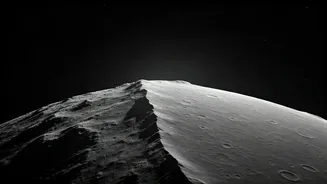
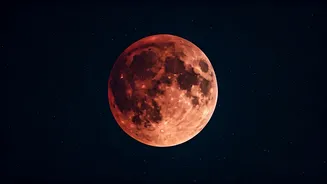
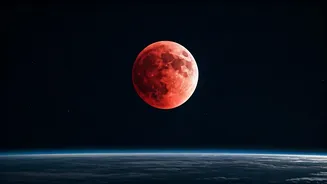
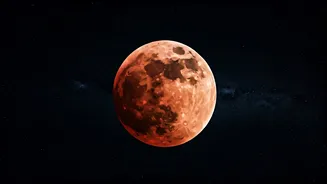
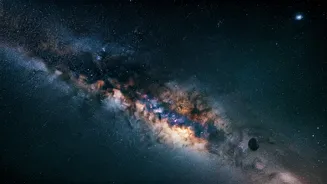
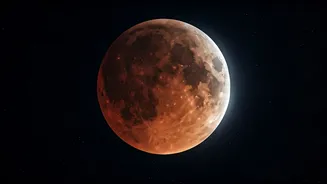
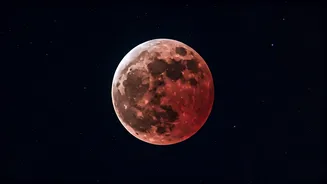
The moon's presence significantly influences our view of the night sky on any given evening, and on February 25, 2026, its phase will dictate how much of the fainter celestial objects we can observe. Depending on the specific lunar cycle, the moon might be waxing or waning, or perhaps nearing its full or new phase. If the moon is a sliver, a crescent, or invisible during a new moon, the sky will be significantly darker, allowing for a more profound view of distant stars and nebulae. This is the ideal scenario for spotting dimmer constellations and perhaps even the faint band of the Milky Way arching overhead. Conversely, if the moon is full or nearly full, its bright luminescence can wash out many of the subtler celestial sights, concentrating attention on the moon itself and the brightest stars and planets. Even a partially illuminated moon offers unique viewing opportunities; its terminator – the line separating the illuminated and dark portions – is a region of dramatic shadows and craters, providing excellent detail for telescopic observation. Lunar features like craters, mountains, and maria (ancient lava plains) become starkly visible along this dividing line, offering a close-up look at our nearest celestial neighbor's rugged terrain. Therefore, understanding the moon's phase is crucial for planning your stargazing activities on this particular night.