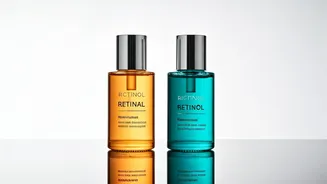








What Is Retinal?
Retinal, also referred to as retinaldehyde, serves as a vital component in the realm of skincare, belonging to the retinoid family. These retinoids are derived
from vitamin A and are celebrated for their capacity to enhance skin health. Retinal specifically represents an intermediary step in the transformation of retinol to retinoic acid. Retinoic acid is the active form that skin cells can directly utilize to enact beneficial changes. The distinctive attribute of retinal lies in its higher potency compared to retinol, as it requires fewer metabolic steps to become active. This conversion efficiency frequently results in more rapid and noticeable outcomes, which are frequently sought after in anti-aging routines.
Retinal's Skin Benefits
Retinal provides an array of notable benefits for the skin, particularly with regard to reducing visible indications of aging. It stimulates collagen synthesis, a crucial protein for maintaining skin firmness and suppleness, which in turn diminishes the appearance of wrinkles and fine lines. Additionally, retinal is effective in accelerating cell turnover. This process prompts the shedding of dead skin cells and encourages the growth of fresh, healthy cells. By unclogging pores and regulating oil production, retinal contributes to clearer skin, helping to alleviate acne and blemishes. Furthermore, it possesses antioxidant properties, which help to shield the skin from free radicals and environmental aggressors, thereby supporting a more radiant and youthful complexion.
Retinol vs. Retinal
The main distinction between retinol and retinal lies in their potency and the steps needed for their activation. Retinol, a less potent form of vitamin A, undergoes a two-step process to transform into retinoic acid. Initially, it converts to retinal, which then becomes the active retinoic acid. Retinal, being closer to the active form, requires only one step, making it more effective and faster-acting than retinol. This distinction can result in more visible enhancements with retinal, though it also often translates to a higher risk of irritation, particularly for sensitive skin types. Hence, it is crucial to carefully gauge your skin's tolerance when incorporating retinal into your skincare routine.
The Retinal Advantage
The popularity of retinal stems from its remarkable efficacy and quicker results in comparison to retinol. Given its more direct conversion to retinoic acid, retinal is capable of delivering noticeable improvements faster than its predecessor. This quicker activation is particularly appealing for those desiring visible changes in their skin appearance, such as diminishing wrinkles and improving skin texture, within a shorter timeframe. Moreover, retinal can be particularly beneficial for individuals whose skin has become accustomed to retinol and requires a more potent solution to continue experiencing improvements. The swiftness of retinal's action, however, also calls for mindful usage to avert potential irritation, ensuring a seamless integration into one’s skincare regimen.
Is Retinal Right?
Determining if retinal suits your skin involves considering several factors, including skin sensitivity and individual goals. Those with sensitive skin must proceed cautiously, as retinal's high potency could lead to irritation, redness, and peeling. It’s important to begin with a low concentration and gradually increase usage as the skin adapts. Individuals seeking quicker results in the reduction of wrinkles, improvement of skin texture, and treatment of acne might find retinal highly beneficial. However, it's wise to perform a patch test before incorporating retinal into a regular routine to monitor your skin’s reaction. Consulting a dermatologist can also offer tailored advice, ensuring that you select the most suitable retinoid for your specific skin needs and goals.