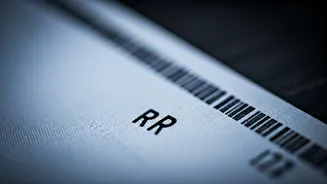








Understanding the 'RR' Stamp
When you receive your boarding pass for a flight departing from India and notice the 'RR' marking, it stands for 'Random Review' or 'Random Referral'.
This designation means you've been selected for an additional security or customs screening before boarding your flight. It's crucial to understand that this selection is purely random and algorithm-driven. It does not indicate any suspicion of wrongdoing on your part, nor is it based on your behaviour, ticket class, nationality, or frequent flyer status. This measure is a standard component of India's aviation security framework, mandated by the Bureau of Civil Aviation Security (BCAS). Airports routinely choose a small percentage of passengers for these extra checks as part of their operational mandate. The principle behind this unpredictability is a globally recognised aviation security doctrine aimed at enhancing deterrence. Generally, this extra screening takes place after you have completed your immigration formalities.
Why Random Reviews Occur
The rationale behind implementing 'Random Review' or 'Random Referral' (RR) procedures stems from the need for a robust and unpredictable security apparatus. As stated in parliamentary responses, the marking of passengers under RR is primarily for monitoring departing individuals and preventing the illegal export of prohibited items, as well as to curb the unlawful movement of Indian and foreign currency exceeding prescribed limits. This process is designed to maintain surveillance on passengers and to deter illicit activities related to cross-border trade and financial regulations. While official statements also mention alerts, specific intelligence, and profiling for excess baggage as contributing factors, the overarching selection mechanism is algorithm-based and random. This ensures that security protocols are not circumvented by predictable patterns. Passengers selected for RR are treated courteously during their checks, and airlines are promptly informed to facilitate a smooth process well before immigration and other security procedures commence. Typically, less than 2% of passengers are subjected to this scrutiny.
Navigating the Screening Process
If your boarding pass bears the 'RR' stamp, you may be directed for further checks. This typically involves additional frisking, a secondary screening of your hand baggage, or a verification of your identification documents. These checks are usually conducted at the boarding gate or a specifically designated security checkpoint and are generally brief. To ensure a seamless experience, it's highly advisable to arrive at the airport with ample time to spare. After completing your initial check-in and standard security screening, you might be guided for these additional procedures. It's essential to cooperate fully with the airport security personnel and follow their instructions diligently. This procedural step is a standard part of enhancing security and is designed to be as efficient as possible for passengers who are selected.
Scope Beyond International Flights
While the 'RR' marking and associated random secondary screenings are frequently observed on international departures due to the integrated customs and stringent cross-border security protocols, they are not exclusively limited to them. These random secondary screening measures can also be applied to domestic flights, depending on the prevailing security directives and threat assessments. The integration of customs checks on international routes makes these screenings more visible, but the underlying security principle of random checks extends to domestic travel as well. Therefore, passengers on domestic routes should also be aware that they might encounter similar, albeit potentially less frequent, additional security evaluations. The primary objective remains the same: to maintain a high level of security across all flight operations.
Global Parallel and Indian Airports
The 'RR' designation is specific to the Indian aviation system, but the concept of random secondary screening is a globally recognised practice. In countries like the United States, similar additional screenings are managed by agencies like the Transportation Security Administration (TSA), although the terminology and boarding pass markings may differ. Within India, this protocol is not confined to a single airport; rather, it is a nationwide directive applicable across all security-controlled airports. Major hubs such as Indira Gandhi International Airport in Delhi, Chhatrapati Shivaji Maharaj International Airport in Mumbai, Kempegowda International Airport in Bengaluru, and Rajiv Gandhi International Airport in Hyderabad, among others, adhere to this centrally governed protocol. It's important to reiterate that this procedure is a mandated layer within India’s aviation security framework and is not a matter of individual airport discretion but a unified national security strategy.