





Blending Brilliance
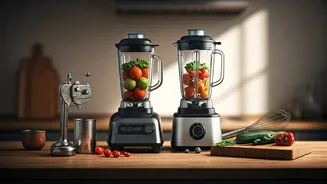
The blender, a culinary game-changer popularized in the 1920s, fundamentally altered food preparation with its ability to liquefy and combine ingredients.
This simple yet powerful appliance made creating smooth soups, rich sauces, and refreshing smoothies a breeze. Its impact extended globally, establishing blended beverages as a common household item and significantly expanding the textural possibilities in home cooking. Before the blender, achieving such fine consistencies required considerable manual effort, making it a true revolution in kitchen efficiency and culinary creativity.
The Can Opener's Role
Emerging in the wake of the 19th-century canned food explosion, the can opener is a testament to convenience. Though often taken for granted, this tool is indispensable for accessing the vast array of pre-packaged foods that form part of modern diets. Without its straightforward function, the practicality and widespread availability of canned goods, from vegetables to ready-made meals, would be severely limited, underscoring its silent but crucial role in contemporary kitchens and food accessibility.
Garlic's Easy Crush
The garlic press, gaining popularity in the 20th century, offered a remarkably simple solution to a common kitchen task: mincing garlic. This unassuming gadget efficiently extracts maximum flavor from garlic cloves with minimal effort, a significant time-saver for home cooks. Its introduction is credited with making garlic a more accessible and frequently used ingredient in global cuisines, subtly contributing to the expansion of flavor profiles in everyday meals and encouraging culinary experimentation.
Microwave Magic
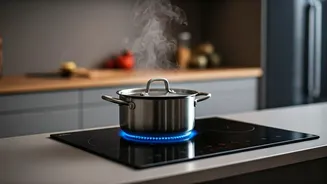
An accidental discovery in the 1940s led to the microwave oven, a device that dramatically sped up cooking and reheating processes. Utilizing electromagnetic waves, it efficiently heats food, revolutionizing meal preparation, defrosting frozen items, and transforming daily kitchen routines. This appliance has become a cornerstone of modern convenience, drastically reducing the time required for many cooking tasks and adapting households to faster-paced lifestyles.
Pressure Cooker Power
With origins stretching back centuries and modern advancements in the 17th century, the pressure cooker significantly slashed cooking times, particularly for dense foods like beans, stews, and tough cuts of meat. By creating a high-pressure environment, it tenderizes ingredients rapidly, conserving fuel and making nutritious, slow-cooked meals achievable for households in a fraction of the usual time, promoting efficient and wholesome home cooking.
Refrigeration's Embrace
The journey from the 19th-century icebox to modern refrigeration marked a monumental shift in food preservation. By dramatically slowing down spoilage, these technologies extended the life of fresh ingredients, making a wider variety of foods accessible for longer periods. This innovation was a pivotal advancement for public health, dietary diversity, and global food supply chains, fundamentally changing how we store and consume food.