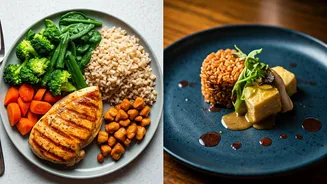

The Home Cooking Halo
The notion that home-cooked meals are automatically the healthier choice is a widespread belief. It's easy to assume that preparing food at home gives
you complete control over ingredients, cooking methods, and portion sizes, therefore leading to healthier outcomes. People often feel that by cooking at home, they can avoid the excessive salt, sugar, and unhealthy fats commonly found in restaurant dishes. However, this assumption isn't always accurate. Home cooking’s health benefits largely depend on your choices in the kitchen. For instance, frequently frying food at home can introduce unwanted fats, potentially negating the advantages of controlling other ingredients. Likewise, generous use of salt or sugar in your recipes can offset the benefits of avoiding these ingredients in commercially prepared meals. Furthermore, portion sizes at home can be as large or larger than restaurant servings, undermining efforts to manage calorie intake. The perceived health advantage of home cooking must be considered within the context of actual cooking practices.
Restaurant Reality Check
The convenience of eating out often comes with a trade-off in nutritional quality, but it's not a complete nutritional disaster. Many restaurants, especially those focusing on healthier options, now offer meals with reduced sodium, portion control, and use of fresh ingredients. The perception that restaurant food is always unhealthy is a generalization. Many restaurants are adapting to consumer demand for healthier options. Menu choices often include grilled or baked proteins, steamed vegetables, and sauces on the side to give consumers better control. However, there are aspects of restaurant dining that can pose challenges to health. Larger portion sizes are a common issue. Additionally, the use of processed ingredients, high levels of salt, and hidden sugars are still prevalent in many dishes. Certain cuisines, known for their richness, can be particularly high in calories and unhealthy fats. When dining out, being mindful of your selections, asking questions about how dishes are prepared, and choosing healthier cooking methods can help you make better nutritional choices.
Nutritional Considerations Examined
When evaluating the healthfulness of home-cooked versus restaurant meals, it's essential to examine the nutritional aspects. One key element is the control over ingredients. When cooking at home, you have complete control over the quality and source of your ingredients, allowing you to opt for fresh produce, lean proteins, and whole grains. You can also minimize the use of additives, preservatives, and unhealthy fats often found in processed foods or pre-prepared sauces. Conversely, restaurant meals may rely on pre-made ingredients and sauces. The cooking methods employed also play a critical role. Home cooking offers the flexibility to choose healthier methods such as steaming, grilling, or baking, instead of frying. Restaurant kitchens may utilize high-heat cooking methods that can diminish the nutritional value of foods. Lastly, portion sizes significantly impact nutritional intake. Home-cooked meals provide an opportunity to control portions, helping you manage calorie intake and prevent overeating. Restaurants often serve generous portions, potentially leading to excess consumption of calories, fats, and sodium.
Making Healthier Choices
To make the best choices for your health, whether eating at home or dining out, requires a conscious approach. At home, focus on planning your meals and using a variety of fresh ingredients. Preparing meals in advance can prevent the temptation of resorting to unhealthy, convenient options. Select lean proteins, such as chicken, fish, or plant-based proteins, and fill half your plate with non-starchy vegetables. Minimize the use of salt and sugar, and explore herbs and spices to add flavor. When dining out, carefully review the menu, and look for healthier choices such as grilled or baked items, and request sauces on the side. Ask about the ingredients and cooking methods used, and don’t hesitate to customize your order. Choose smaller portion sizes by sharing dishes or taking leftovers home. Drink water instead of sugary beverages, and be mindful of hidden calories in appetizers and desserts. Making educated decisions and being aware of the nutritional implications can help you enjoy delicious meals without compromising your health goals.