






Detection and Response
The core of this innovative approach lies in the advanced tower detection systems. These systems, developed by Sensory AI, are designed to identify the key
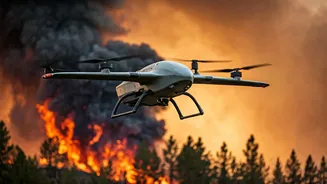
indicators of a wildfire: smoke, heat, and flames. Once a fire is detected, the system swiftly relays the location to a specialized firefighting drone. This drone's primary mission is to reach the fire's coordinates rapidly. As Daniel Kim from Valley Christian Schools points out, the drone is equipped to release its payload upon arrival. The goal is to control the fire's spread before the arrival of traditional firefighting units, such as engines, firefighters, helicopters, and air tankers. The aim is not to replace these methods but to serve as an initial response unit, potentially handling small fires or slowing larger ones.
The Drone Advantage
Drones possess a significant advantage in terms of maneuverability and speed. They can quickly take to the skies and provide real-time video and audio, allowing for rapid assessment of the situation. This contrasts with the time it takes for human firefighters to access the site, especially in remote or difficult terrains. Ginger Zee, from , emphasizes that drones can reach a fire in seconds, while firefighters may take minutes or even hours. This fast response time is crucial to minimizing the fire's growth. The emphasis is on containing the blaze until conventional firefighting resources can be deployed. This initial response factor is considered critical in limiting the damage caused by a fire. Moreover, a system of towers in Orange County aids in early fire detection and is integral to the drone-based approach.
Working in Tandem
The integration of drones with traditional firefighting methods offers a comprehensive approach. Kevin Fetterman (Ret), from the Orange County Fire Authority, explains that drones can be launched simultaneously with the usual firefighting apparatus. This collaborative strategy allows the drones to deploy their extinguishing agents and keep the fire in check. The aim is to hold the fire until fire engines, firefighters, helicopters, and air tankers arrive at the scene. This collaborative approach enhances the effectiveness of firefighting operations. The hope is that this new technology will act in concert with existing methods to provide the best possible response.
The Scale of Impact
Wildfires can have devastating consequences, as highlighted by the Eaton and Palisades fires in Los Angeles in January 2025. These blazes burned for nearly a month, consuming approximately 37,000 acres of land. The potential for such extensive damage underscores the need for rapid and effective responses. The United States, with its vast and often humid landscapes, is particularly vulnerable. The number of wildfires is alarming, with 56,580 wildfires occurring in 2023 and 64,897 in 2024. Therefore, the swift intervention of drones, designed to tackle these blazes, could be crucial. By responding quickly, these drones can aid in containing the fire's spread, giving firefighters a better chance of extinguishing it rapidly.
Drone Capabilities Examined
Drones come in various sizes and can be equipped with different payloads, depending on the scale of the situation. Kaizen Aerospace, for instance, has developed drones of varying sizes. The larger models, like one measuring 13 feet, can carry a payload of up to 1,000 pounds. This illustrates the potential of these devices to carry substantial quantities of water or other extinguishing agents. The size and payload capacity of these drones are key factors in their effectiveness. The speed and convenience of drone deployment, coupled with their ability to reduce the need for putting personnel in harm's way, highlight the growing importance of this technology.