






Aerial Confrontation in Arabian Sea
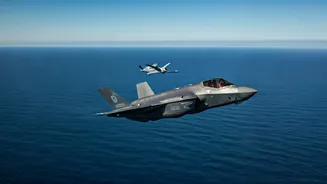
In a high-stakes moment over the Arabian Sea, an American F-35 fighter jet was deployed to intercept and neutralize an Iranian drone. This drone, identified
as a Shahed-139, was reportedly maneuvering aggressively towards the USS Abraham Lincoln aircraft carrier. The US military, through Captain Tim Hawkins of US Central Command, confirmed that the F-35C fighter, operating from the carrier, engaged the drone in an act of self-defense. The primary objective was to ensure the safety of the carrier and its personnel. Fortunately, this engagement did not result in any injuries to US service members or damage to American assets. The incident underscores the delicate security situation in the region and the constant vigilance required by naval forces.
Diplomacy and Escalation
The drone incident occurred concurrently with significant diplomatic maneuvering between the United States and Iran. While officials were exploring avenues for nuclear talks, President Donald Trump issued warnings about potential repercussions if no agreement was reached, especially as US warships were positioned near Iran. The deployment of the Abraham Lincoln carrier strike group was a key component of a broader US military buildup in the Middle East, a response to Iran's handling of recent anti-government protests. These protests were some of the deadliest since the 1979 revolution, and while President Trump initially refrained from direct intervention, he subsequently demanded nuclear concessions from Tehran. This strategic chess game saw warships dispatched towards Iran's coast, with President Trump noting Iran was "seriously talking" about negotiations, a sentiment echoed by Iranian official Ali Larijani who confirmed discussions were being arranged.
Regional Harassment Incidents
Adding to the regional tension, shortly after the drone incident, Iran's Revolutionary Guard (IRGC) engaged in harassing behavior towards a US-flagged merchant vessel, the M/V Stena Imperative, in the Strait of Hormuz. According to Captain Hawkins of US Central Command, two IRGC boats and a Mohajer drone approached the merchant ship, issuing threats to board and seize it. This event further highlighted the simmering tensions between the two nations, which have been exacerbated by stalled nuclear talks and Iran's assertive regional actions. The White House Press Secretary, Karoline Leavitt, reiterated the CENTCOM decision to strike the Iranian drone, emphasizing its unmanned nature and aggressive posture towards the USS Lincoln, while also reaffirming President Trump's commitment to diplomacy, contingent on mutual effort.