







Introducing Proactive AI Agents
OpenAI has launched a significant advancement in artificial intelligence with the introduction of workspace agents within ChatGPT. This represents a pivotal
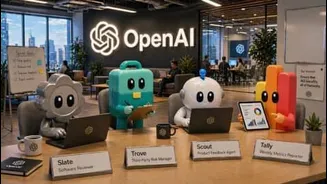
shift from AI acting merely as a responsive assistant to becoming an active collaborator capable of undertaking complex, multi-step tasks across diverse teams and departments within an organization. In essence, these workspace agents are intelligent systems that companies can develop, share, and deploy within the ChatGPT environment to automate repetitive or mundane duties. Unlike conventional AI chatbots that require direct prompts for every action, these newly developed agents are engineered to perform tasks autonomously. Powered by OpenAI's Codex AI coding assistant, these agents are equipped to handle a broad spectrum of activities, including writing code, synthesizing information from documents, generating reports, and even responding to communications, all seamlessly integrated into an organization's existing workflow. It's important to note that these agents are specifically designed for 'repeatable, structured workflows' that typically involve multiple tools, sequential steps, and collaboration among individuals, rather than simply answering ad-hoc user queries.
Seamless Background Operation
These intelligent AI agents function in a cloud-based environment, which liberates them from the necessity of constant human input. Once an assignment is delegated, they can continue their work diligently in the background, even when the user is not actively engaged or is offline. Furthermore, their integration capabilities extend to popular workplace tools such as Slack, email systems, and internal databases. This connectivity enables them to grasp the context of ongoing projects, execute tasks efficiently, and advance initiatives across different platforms. For instance, a sales agent could autonomously extract valuable insights from call notes, analyze extensive customer data, formulate follow-up correspondence, and distribute updates to the relevant team members. This entire process can unfold automatically, as the agent adheres to pre-defined operational protocols and guidelines. The creation process for these agents is remarkably user-friendly; individuals can simply articulate their desired workflows in natural language, and ChatGPT will then provide step-by-step guidance to assist in building the agent. These new workspace agents are being positioned as the next evolutionary stage building upon OpenAI's 'Custom GPTs,' which allowed users to create personalized chatbots. While Custom GPTs proved beneficial for specific applications, their functionality was largely confined to responding to prompts. In contrast, workspace agents are distinguished by their proactive and action-oriented nature, capable of planning, executing, and refining tasks independently, according to OpenAI's statements.
Advanced Capabilities & Control
Workspace agents possess the remarkable ability to manage intricate workflows that encompass multiple stages, diverse tools, and various decision points, extending far beyond simple question-answering capabilities. A key feature is their 'shared team context,' meaning that unlike individual AI assistants, these agents are built for collaborative use. They can access shared organizational data, adhere to established company procedures, and maintain task continuity for the entire team. Crucially, they offer 'persistent operation' due to their cloud-based nature, allowing them to continuously work in the background, execute scheduled tasks, and react to triggers automatically. Another significant advantage is 'tool integration,' where workspace agents can interface with external applications and systems. This direct connectivity empowers them to perform actions like dispatching emails, updating records, or generating documents. Moreover, they possess the capacity for learning, improving their performance over time as teams refine instructions and workflows based on their interactions. Given their autonomous operation, control, safety, and governance are paramount concerns. OpenAI has underscored that organizations retain full authority during the deployment of these workspace agents. Administrators can precisely define the data agents can access, the tools they are permitted to use, and specify actions that may require human ratification. For sensitive operations, agents can be configured to seek explicit permission before proceeding. The company has also implemented enterprise-grade safety measures, including monitoring tools, usage analytics, and defenses against threats like prompt-injection attacks. OpenAI asserts that a compliance API provides companies with the ability to track agent configurations and usage, offering transparent oversight of their operations post-deployment.
Transformative Use Cases
Early demonstrations of workspace agents highlight their potential to substantially reduce manual labor across numerous industries. Sales departments can leverage these agents to meticulously compile research on prospects, rigorously vet potential leads, and even pre-draft client communications. Product teams can utilize workspace agents to efficiently synthesize vast amounts of user feedback and to promptly address internal inquiries. Concurrently, finance divisions can automate complex procedures such as financial reconciliations and the generation of periodic reports. OpenAI reports that in certain scenarios, tasks that previously consumed many hours of manual work each week can now be executed automatically and unobtrusively in the background. Fundamentally, workspace agents signify a broader paradigm shift in artificial intelligence—evolving from tools that assist individuals to sophisticated systems capable of performing tasks on behalf of entire teams. This transition also redefines how organizations leverage AI, enabling it to manage entire operational workflows, act with a degree of independence, and significantly diminish the constant need for human oversight in repetitive processes. OpenAI's latest offering positions it prominently in the rapidly advancing field of 'agentic AI,' which refers to systems designed to actively undertake and complete tasks. While a close competitor, Anthropic, has recently introduced comparable tools like Claude Cowork and Managed Agents, the accelerated pace of innovation suggests that the future of AI will likely center on the development of highly capable digital assistants rather than mere conversational chatbots.