





The Rise of Silent Theft
In an era of technological advancement, car theft has evolved into a more insidious 'silent' operation. Unlike traditional break-ins involving shattered
glass or forced entry, this new breed of crime allows thieves to abscond with vehicles in mere seconds, leaving owners bewildered to find their cars simply gone. This digital form of carjacking bypasses traditional alarm systems and leaves no physical evidence, making it incredibly difficult to detect and investigate. The convenience of keyless entry systems, while appealing, has inadvertently created vulnerabilities that tech-savvy criminals are adept at exploiting. Understanding this shift from physical to digital theft is the first step in protecting your valuable assets from these sophisticated methods.
Key Fob Signals Explained
Modern cars often feature keyless entry and ignition systems, designed for ultimate convenience. The magic behind this lies in your key fob, which continuously emits a low-power radio signal. Your car is programmed to listen for this signal, and when it detects your fob within a certain proximity, it unlocks its doors and allows the engine to start. This constant communication, however, is precisely where the vulnerability emerges. Thieves have developed methods to intercept and amplify this signal, tricking the car into believing the key is present even when it's far away, enabling them to drive off undetected.
How Foil Acts as a Shield
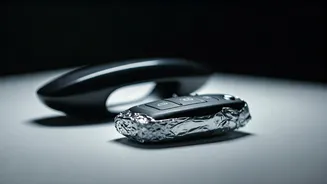
The practice of wrapping car keys in aluminium foil is rooted in a simple scientific principle: signal blocking. Aluminium foil acts as a rudimentary Faraday cage, a physical barrier that prevents electromagnetic fields from penetrating. By completely encasing the key fob in foil, the intent is to block the radio signal it emits. This prevents the signal from being intercepted and relayed by thieves using sophisticated electronic devices. In theory, if the car cannot detect the key's signal, it will not unlock, thus thwarting a relay attack. It's a DIY solution aiming to disable the very technology that makes the car vulnerable to this specific type of theft.
Foil's Limitations and Risks
While wrapping keys in aluminium foil might offer some basic protection, it's far from a foolproof security measure. The effectiveness of foil is often compromised by its fragility and the difficulty of achieving a perfect, gap-free seal. Tears can easily form, and even minuscule openings can allow the key's signal to escape, rendering the protection useless. Furthermore, the inconvenience of daily wrapping can lead to lapses in security, with owners forgetting to do it or the foil becoming degraded over time. It's also crucial to remember that relay attacks are just one method of car theft; other means like physical break-ins, towing, or different electronic tools can still be employed, making foil a temporary, limited patch rather than a comprehensive solution.
Expert-Recommended Protections
Security professionals advocate for more robust and reliable methods to protect your vehicle from modern theft techniques. Keeping your key fob at a distance from external doors and windows significantly reduces the chances of signal interception. Investing in a purpose-built Faraday pouch offers superior and consistent signal blocking compared to homemade foil wraps. If your car model allows, disabling the keyless entry feature can add an extra layer of security. For visible deterrence, consider adding physical security devices like steering wheel locks. Vigilance is key; always be aware of your keys' whereabouts, especially in public spaces, to minimize risk.