

An Unconventional Volcanic Glow
Prepare to have your perception of volcanoes completely upended when visiting Kawah Ijen after sunset. Instead of the familiar fiery red hues or glowing
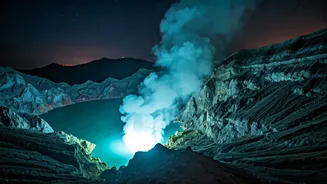
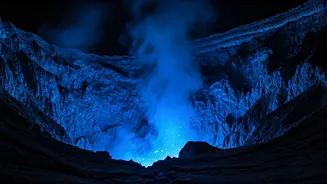
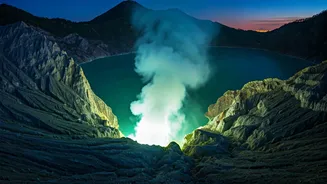
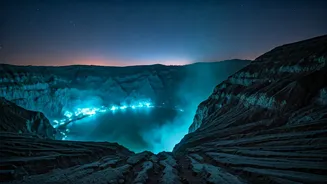
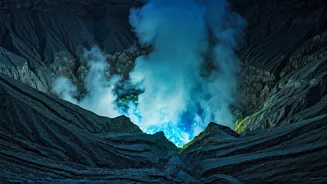
orange skies typically associated with volcanic activity, this Indonesian crater offers an astonishingly different spectacle. As darkness descends, vivid streaks of an almost neon blue light begin to cut through the night, creating an illusion that is so surreal it might make you question your senses. At first glance, the phenomenon can easily be mistaken for flowing blue lava, a captivating misinterpretation that belies the even more fascinating scientific reality at play. This unusual display transforms the rugged volcanic landscape into something akin to a scene from a science fiction film, challenging conventional notions of what a volcano can look like.
The Science of Blue Flames
The mesmerizing electric blue flames at Kawah Ijen are not molten rock, but rather a spectacular result of burning sulfurous gases. Deep within the earth, cracks in the volcano release a substantial volume of gases rich in sulfur. These gases emerge at incredibly high temperatures, often exceeding 600 degrees Celsius. Upon contact with the oxygen present in the atmosphere, these superheated gases ignite spontaneously. The intense heat at which sulfur burns causes the flames to emit a distinct, sharp, electric blue light. This fiery display is most dramatically observed during the night, when the darkness amplifies the intensity and visibility of the blue flames. As the burning gases flow and flicker, they can appear to trail down the rocky surfaces of the crater, further enhancing the illusion of flowing blue lava, though it is in fact a gas combustion event.
Day vs. Night Transformation
The contrast between Kawah Ijen's daytime appearance and its nocturnal transformation is truly remarkable. When bathed in daylight, the crater presents a far more conventional, albeit still rugged, volcanic landscape. The vibrant blue flames are barely discernible, lost in the ambient light, and the area largely resembles a dusty, desolate volcanic terrain. There are few visual cues to hint at the extraordinary spectacle that unfolds after dusk. It is only as the sun sets and the darkness envelops the crater that the environment undergoes a dramatic metamorphosis. The emergence of the electric blue flames redefines the entire area, imbuing it with an almost alien quality, as if stepping onto another planet or into a fantastical realm depicted in science fiction narratives.
Turquoise Lake and Human Endeavor
Beyond the captivating blue flames, Kawah Ijen is characterized by a striking acidic lake situated at its core. This crater lake boasts an intense turquoise hue, lending an almost picturesque quality to the volatile landscape. However, its beauty is deceptive, as the water is highly corrosive and poses significant dangers. Adding another layer of complexity and human drama to this extraordinary location is the presence of dedicated sulfur miners. These individuals undertake the incredibly demanding and perilous task of extracting sulfur by hand. They navigate the treacherous crater daily, breaking solidified sulfur deposits with basic tools and then carrying heavy loads back up the slopes, often with minimal protective gear. This arduous, manual labor, performed in one of the world's most extreme environments, creates a profound juxtaposition against the surreal natural phenomenon of the blue fire.
A Blend of Wonder and Resilience
Kawah Ijen's lasting impact on visitors stems from its unique blend of breathtaking natural phenomena and the stark reality of human resilience. The volcano defies expectations, replacing the conventional image of red lava with the ethereal glow of electric blue flames. This unexpected display serves as a powerful reminder of nature's capacity to surprise and subvert our preconceived notions. When juxtaposed with the visible efforts of the sulfur miners, who toil relentlessly in the harsh, sulfuric atmosphere, the experience becomes profoundly memorable. The sight of the surreal blue fire against the backdrop of such difficult human labor creates a powerful and thought-provoking contrast, making Kawah Ijen an unforgettable destination that stays with observers long after their visit, highlighting both the awe-inspiring beauty and the challenging realities of our planet.