





Expressway Meets Ecosystem
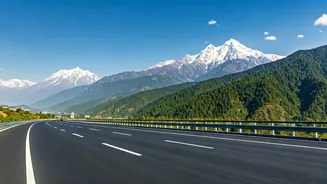
The recent inauguration of the Delhi-Dehradun Expressway marks a significant milestone, not only for enhancing connectivity but also for its groundbreaking
12-kilometer elevated wildlife corridor. This impressive structure, among the longest of its kind in Asia, exemplifies a growing commitment to integrating infrastructure development with ecological preservation. Wildlife corridors, in essence, are protected pathways that facilitate the safe movement of animals between fragmented habitats and crucial breeding grounds. Their implementation is vital for mitigating human-wildlife conflicts and fostering robust biodiversity. The Delhi-Dehradun corridor specifically traverses an ecologically sensitive region, necessitating advanced wildlife-friendly underpasses and overpasses to ensure minimal disruption to the natural environment and the animals that call it home.
Uttarakhand's Vital Link
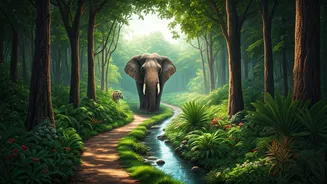
The Rajaji-Corbett Wildlife Corridor in Uttarakhand stands as a prominent example of successful wildlife connectivity. This crucial stretch serves as a vital artery, linking the expansive Rajaji National Park with the renowned Jim Corbett National Park. Its primary function is to enable the safe passage of iconic species such as elephants, tigers, and leopards, as well as numerous deer populations, allowing them to move freely between these two significant forest reserves in North India. The strategic placement of the Delhi-Dehradun Expressway through this ecologically sensitive zone underscores the critical importance of this corridor, prompting the inclusion of specialized wildlife underpasses and overpasses in the expressway's design. This approach ensures that progress in transportation does not come at the expense of natural habitats.
Madhya Pradesh's Tiger Trail
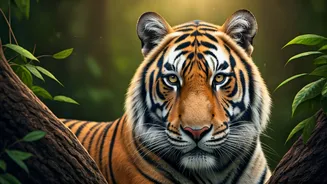
In the heart of Central India lies the Kanha-Pench Corridor, a celebrated route dedicated to preserving tiger populations. This corridor meticulously connects the Kanha National Park and the Pench National Park, playing a pivotal role in facilitating the movement of tigers between these two tiger-rich reserves. It is widely recognized as one of the most significant pathways for tiger dispersal in the region, essential for maintaining the genetic health and viability of these magnificent big cats. The conservation of this corridor is paramount for ensuring the long-term survival of tiger populations by allowing them to access new territories and breeding grounds, thereby preventing inbreeding and supporting robust gene flow.
Assam's Flood Escape Route
The Kaziranga-Karbi Anglong Corridor in Assam serves a crucial life-saving function for the region's wildlife, particularly during the monsoon season. This corridor bridges the renowned Kaziranga National Park with the forested hills of Karbi Anglong, providing an essential escape route for animals like rhinos, elephants, and tigers, when Kaziranga experiences its annual seasonal floods. As large parts of Kaziranga become submerged, this elevated corridor offers a safe passage to higher grounds, preventing mass casualties and ensuring the continuity of these species' life cycles. It is a testament to the adaptive conservation strategies needed in diverse ecological landscapes.
Southern India's Grand Passage
Spanning across Tamil Nadu, Kerala, and Karnataka in South India, the Nilgiri Wildlife Corridor is a sprawling and significant conservation landscape. It encompasses one of Asia's most extensive wildlife corridors, masterfully linking protected areas such as Bandipur National Park, Mudumalai National Park, and Wayanad Wildlife Sanctuary. This vast network acts as a critical migratory pathway for elephants and tigers, allowing them to roam and reproduce across a broad, interconnected ecosystem. The Nilgiri Biosphere Reserve, within which this corridor lies, is celebrated globally as a prime example of successful landscape-level conservation, demonstrating how diverse habitats can be maintained to support large predator populations.
Ghats' Connecting Artery
The Sathyamangalam Corridor in Tamil Nadu plays a vital role in connecting the Western and Eastern Ghats, two of India's most biodiverse mountain ranges. This critical link serves as a primary migration route for a variety of wildlife, including elephants, leopards, and tigers, enabling them to traverse between these distinct ecosystems. The Sathyamangalam Tiger Reserve, a significant part of this corridor, has gained prominence for its increasing tiger sightings, transforming it into an important eco-tourism destination. This corridor's strategic location is crucial for maintaining the genetic diversity and population health of species that rely on inter-mountain movement.
Himalayan Foothills' Haven
Stretching across Uttarakhand, Uttar Pradesh, and Bihar, the Terai Arc Landscape represents one of India's most ambitious wildlife conservation endeavors. This extensive corridor connects numerous forest reserves and vital grasslands situated along the foothills of the Himalayas. It provides critical habitat and safe passage for significant populations of elephants, rhinos, and tigers, helping to safeguard these majestic species. The Terai Arc is a remarkable example of how large-scale, multi-state conservation efforts can effectively protect diverse wildlife and their habitats, ensuring the ecological integrity of the Himalayan region.