







Doodle's Cactus Symbolism
The recent Google Doodle for Mother's Day deviated from traditional floral imagery, opting instead for a handcrafted card adorned with a carnation and cacti.
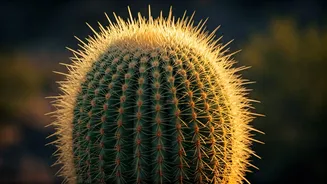
This thoughtful choice was deliberate, with Google explaining that the cacti were chosen to represent a mother's protective nature and her capacity for unconditional love. The animated doodle itself presented a garden theme, where each letter was crafted from folded paper resembling calendars. Notably, the two 'O's in Google were depicted as charming, animated cacti that blossomed with flowers and waved when interacted with, adding a playful yet meaningful touch to the tribute.
Global Mother's Day Dates
While many nations, including India, the United States, Australia, and Canada, observe Mother's Day on the second Sunday of May, its global celebration isn't uniform. For instance, the United Kingdom and several European countries mark 'Mothering Sunday' on the fourth Sunday of Lent, typically falling in March. Other regions have even more distinct traditions. Thailand celebrates this occasion on August 12, which coincides with the birthday of Queen Sirikit. In Ethiopia, motherhood is honored during the autumn season through a vibrant, multi-day festival known as Antrosht, showcasing the diverse cultural ways of recognizing maternal figures.
Ancient Origins
The concept of celebrating mothers and fertility stretches back to antiquity. Ancient civilizations like the Greeks and Romans held spring festivals dedicated to revered mother goddesses. Among these was Rhea, the mother of Zeus in Greek mythology, and Cybele, also known as Magna Mater, meaning the "Great Mother" in Roman traditions. During these ancient rituals, devotees would offer gifts such as flowers and honey cakes at dawn, seeking blessings and honoring the maternal divine.
Modern Mother's Day Genesis
The contemporary observance of Mother's Day owes much to the dedicated efforts of American social activist Anna Jarvis in the early 1900s. In 1908, she spearheaded the first official Mother's Day event to commemorate her own mother, who had actively contributed to community service during the American Civil War. This tribute eventually led to the formal establishment of Mother's Day, celebrated on the second Sunday of May, which happened to be the same date her mother had passed away. Today, the celebration has broadened significantly, encompassing not only biological mothers but also grandmothers, stepmothers, foster mothers, aunts, and any maternal figures who provide nurturing care.